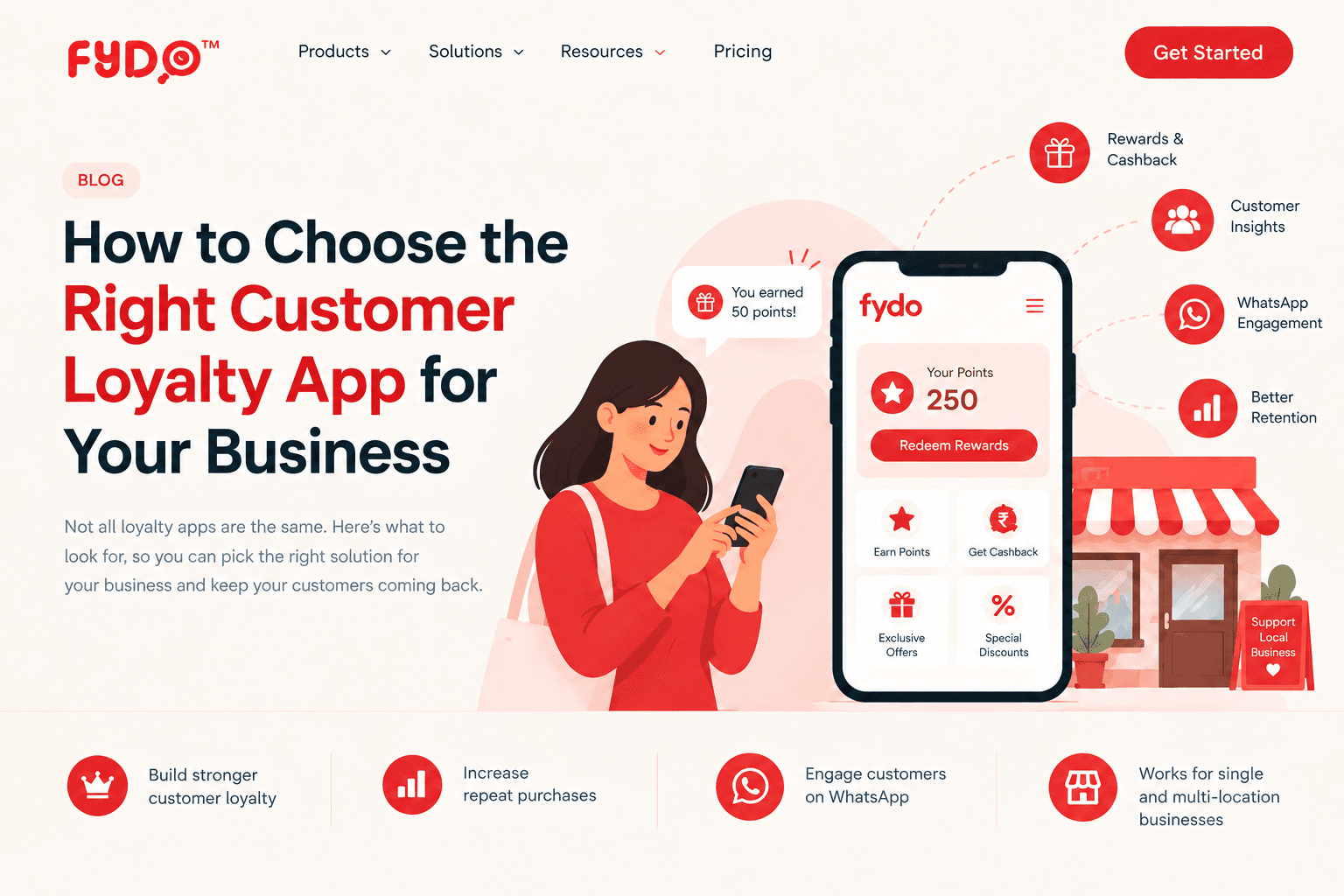
How to Choose the Best Customer Loyalty App
By Fydo Team
In this article
Schedule a free consultation
Choosing a best customer loyalty app comes down to one question: can it help you turn existing customers into repeat customers without making the program difficult to run? The right customer loyalty app should make rewards simple for customers, easy for staff to manage, and useful for business owners who want to understand customer behavior.
For a grocery store, salon, boutique, restaurant, jewellery store, or growing retail business, the requirements can be different. Some businesses need cashback, while others may benefit more from visit based rewards, spending based offers, or targeted campaigns.
This guide explains what to look for in a loyalty app, which features actually matter, how to compare different loyalty program software options, and how a self serve platform such as Fydo can help businesses get a loyalty program running without depending on a developer.
Key Takeaways
- Start with the business goal: Decide whether you want more repeat visits, higher spending, better customer engagement, or stronger retention before choosing software.
- Choose features around your customers: Cashback, rewards, personalized offers, customer segmentation, and campaign tools should match how your customers actually shop.
- Keep setup simple: A loyalty program is easier to maintain when business owners can create rewards and campaigns themselves instead of waiting for technical support.
- Don't ignore customer communication: Rewards work better when customers know what they have earned and receive relevant offers at the right time.
- Check reporting: Your loyalty software should help you understand visits, repeat customers, customer behavior, and campaign performance.
- Think beyond points: A modern customer loyalty program can combine rewards, cashback, offers, customer insights, and marketing.
Why Does Your Business Need a Customer Loyalty App?
A customer loyalty app gives businesses a structured way to reward existing customers and encourage them to return.
Traditional loyalty methods—paper cards, manual spreadsheets, or remembering regular customers—can work at a very small scale, but they become difficult to manage as the customer base grows. Digital loyalty software can automate customer records, reward rules, campaigns, and reporting.
For a local business, the objective isn't simply to give away discounts. The real objective is to create a reason for a customer to choose your business again.
The Business Case for Customer Retention
Customer retention becomes easier to manage when a business knows who its repeat customers are, how frequently they visit, and which offers generate engagement.
A loyalty platform can help a business:
- Encourage repeat purchases
- Reward frequent customers
- Identify high value customers
- Re engage inactive customers
- Create targeted offers
- Track loyalty activity
- Build a customer database
- Communicate promotions directly with customers
Current loyalty software in India commonly combines points, tiers, cashback, referrals, customer segmentation, messaging, and analytics, although the exact feature set varies by provider.
The important point is simple: don't choose software because it has the longest feature list. Choose it because its features solve your actual retention problem.
How to Choose the Best Customer Loyalty App for Your Business
The best customer loyalty app for one business may not be the right choice for another. Start by matching the software to your business model, customers, reward strategy, and operational needs.
Step 1: Define Your Loyalty Goal
Before comparing loyalty apps, decide what you want the program to accomplish.
For example, a grocery store may want customers to visit more frequently. A boutique may want to encourage higher value purchases. A salon may want customers to return at regular intervals.
Useful objectives include:
- Increase repeat visits
- Encourage repeat purchases
- Reward high value customers
- Re engage inactive customers
- Increase customer engagement
- Promote selected products
- Build stronger customer relationships
A clear goal also makes it easier to measure whether your customer loyalty program is actually working.
Step 2: Understand Your Customers
Your reward structure should reflect customer behavior.
A grocery customer may respond to frequent, smaller rewards because grocery purchases can happen regularly. A Jewellery customer may purchase less frequently, making higher value rewards or special occasion offers more relevant.
A restaurant could use visit based rewards, while a salon might create offers around repeat appointments.
This is why customer segmentation matters. Fydo's platform states that businesses can view customer visits and spending, identify repeat and high value customers, and identify customers who have stopped visiting.
Step 3: Choose the Right Loyalty Model
There isn't one universal customer rewards program.
Common models include:
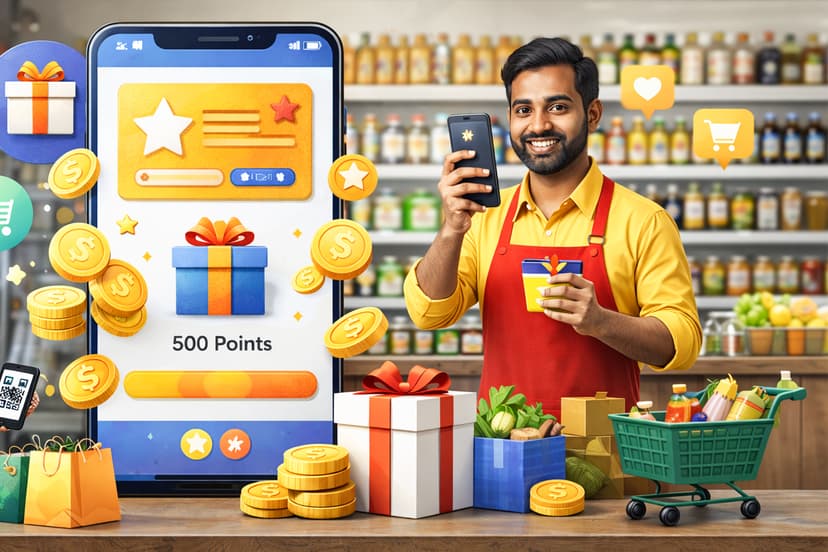
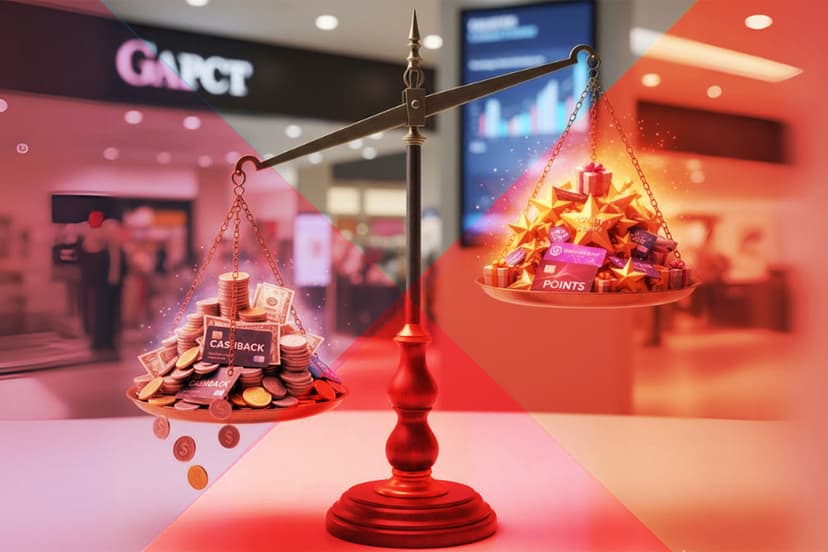
Points based loyalty: Customers earn points based on purchases or other qualifying activity and redeem them for rewards.
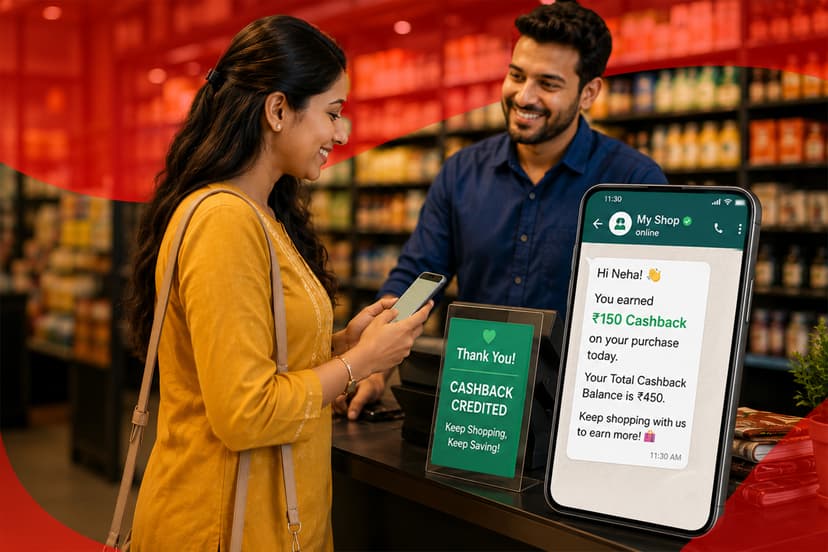
Cashback loyalty program: Customers receive cashback according to rules defined by the business.
Visit based rewards: Customers receive a reward after a specified number of visits.
Spend based rewards: Higher spending can unlock different rewards or benefits.
Offer based loyalty: Businesses provide targeted promotions to selected customer groups.
Hybrid loyalty: A business combines two or more approaches.
For a small business, simplicity usually wins. If customers need a complicated explanation to understand how they earn a reward, the program may create friction instead of loyalty.
What Features Should a Customer Loyalty App Have?
A useful customer loyalty app should make three things easier: rewarding customers, communicating with them, and understanding their behavior.
Rewards and Cashback Flexibility
The software should allow you to create reward rules that fit your business.
Look for options such as:
- Visit based rewards
- Spending based rewards
- Cashback
- Discounts
- Special occasion rewards
- Personalized offers
- Campaign based rewards
Fydo's current platform describes rewards based on visits, spending, timing, customer type, and special occasions.
The exact reward structure you choose should depend on your margins. A reward isn't useful if it brings customers back but makes every repeat transaction unprofitable.
Customer Segmentation
Segmentation allows businesses to treat different customers differently.
Instead of sending the same offer to everyone, you can think in groups such as:
- New customers
- Repeat customers
- High value customers
- Inactive customers
- Frequent visitors
This matters because a customer who visited yesterday probably doesn't need the same message as someone who hasn't visited for three months.
Fydo says its platform can segment customers using factors such as visit frequency and spending.
WhatsApp and Customer Communication
A loyalty program shouldn't operate silently.
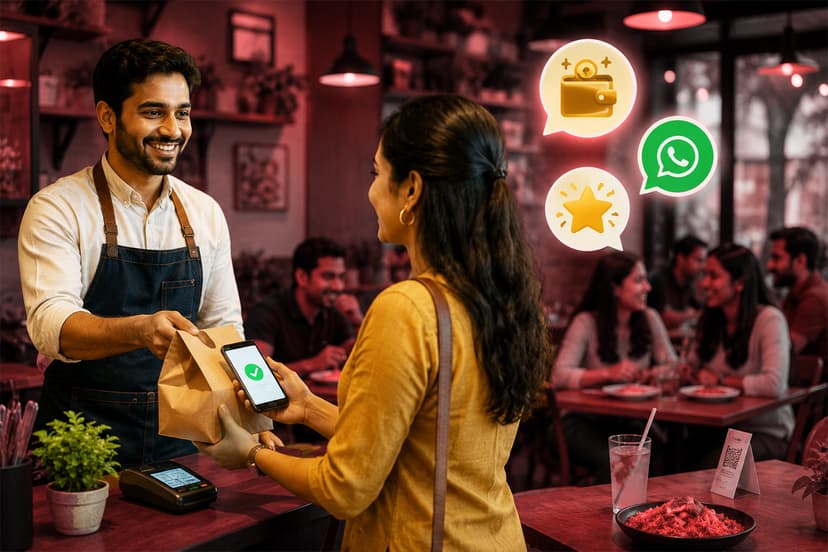
Customers need to know about rewards, offers, campaigns, and reasons to return. For businesses that already communicate with customers through WhatsApp, having customer engagement tools connected to loyalty data can reduce the need to manage separate lists and systems.
Fydo currently promotes WhatsApp marketing as part of its customer growth platform and says businesses can use campaigns to bring inactive customers back and promote offers.
Reporting and Customer Insights
A loyalty rewards app should give you more than a list of customers.
Useful reporting questions include:
- How many repeat customers do we have?
- How frequently do customers return?
- Which campaigns are performing?
- Which customers spend more?
- Which customers have stopped visiting?
- Which rewards are being used?
Fydo's platform currently highlights repeat customer tracking, visit information, campaign performance, and customer behavior insights.
Customer Loyalty App Comparison: What Should You Look For?
The following framework can help business owners compare loyalty program software without getting distracted by unnecessary features.
FeatureWhat to CheckWhy It Matters
Reward rules
Visits, spending, cashback, offers
Lets you match rewards to your business
Customer segmentation
Frequency, spending, customer type
Enables more relevant campaigns
Communication
WhatsApp, notifications or other channels
Keeps customers aware of rewards
POS compatibility
Works with existing setup
Avoids unnecessary system changes
Self serve setup
Can you configure it yourself?
Reduces dependency on developers
Reporting
Visits, customers, campaigns
Helps measure performance
Ease of use
Simple merchant interface
Makes daily operation easier
Scalability
Supports business growth
Prevents early platform limitations
The key question is not “How many features does this app have?”
Ask instead:
“Can my team actually use these features consistently?”
Can You Set Up a Customer Loyalty App Without a Developer?
Yes. For a straightforward loyalty program, a self serve customer loyalty app can allow a business owner to configure rewards and begin using the program without writing code.
This is one area where the difference between platforms matters.
Some loyalty software involves onboarding, configuration, integrations, or support from the provider. That can make sense for complex enterprise programs, especially when there are multiple locations, complicated approval processes, or custom integrations.
But if you're running a grocery store, boutique, salon, restaurant, or local retail business with a straightforward reward structure, you genuinely may not need a developer.
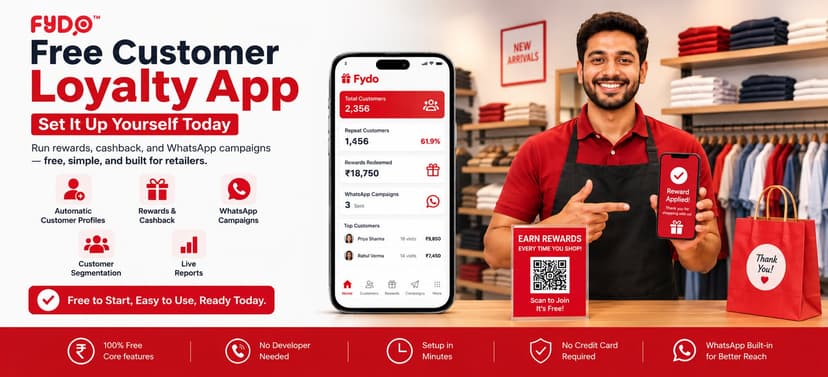
Fydo currently describes a three step setup: download the partner app, create rewards based on visits, spending, or special occasions, and invite customers. Its site also states that Fydo can work with an existing POS or without one.
A Practical Self Serve Setup
A basic implementation can follow this sequence:
1. Define your reward
Example: reward customers based on visits or spending.
2. Set your rules
Decide who qualifies, what they earn, and when the reward can be used.
3. Add customers
Begin enrolling customers during normal business interactions.
4. Communicate
Tell customers what they've earned and introduce relevant offers.
5. Review the results
Monitor repeat visits, customer activity, and campaign performance.
Start simple. You can add more sophisticated campaigns after the basic loyalty loop is working.
How Should Different Businesses Use a Loyalty Rewards App?
The same customer loyalty app can serve different businesses, but the strategy should change according to buying behavior.
Grocery Stores
Grocery businesses often have frequent purchases. A practical program can focus on repeat visits, cashback, or rewards that encourage customers to return regularly.
Salons
Salons can build loyalty around repeat appointments, spending, special occasions, and targeted offers for customers who haven't returned recently.
Boutiques and Clothing Stores
Fashion purchases may be less frequent but higher in value. Spend based rewards, seasonal campaigns, and targeted offers can be more relevant than a simple visit counter.
Restaurants and Cafés
Restaurants can use visit based rewards, spending rewards, special offers, and customer campaigns to encourage diners to return.
Jewellery Stores
Jewellery purchases are typically less frequent, so the loyalty strategy may focus more on customer relationships, special occasions, personalized communication, and higher value purchase behavior.
The principle remains the same: your loyalty program should follow the customer's buying pattern rather than forcing every business into the same reward model.
What Should You Check Before Choosing Loyalty Program Software?
Before committing to a platform, ask practical questions rather than relying only on the product's marketing page.
Questions to Ask
- Can I create rewards myself?
- Do I need a developer?
- Does it work with my existing POS?
- Can I use it without a POS?
- Can I segment customers?
- Can I communicate with customers from the same platform?
- Can I track repeat customers?
- Can I see campaign performance?
- How easy is redemption?
- Can the platform scale as my business grows?
- What features are included in the plan I actually need?
Current buyer guides for Indian loyalty software also emphasize checking POS compatibility, reward calculation, customer segmentation, omnichannel use, analytics, and scalability before selecting a platform.
A Step by Step Framework for Choosing Your Customer Loyalty App
Once you've defined your requirements, use this process to narrow down your options.
Step 1: Write Your Requirements
List your business type, number of locations, customer volume, reward model, communication channels, and reporting requirements.
Step 2: Select Three to Five Platforms
Compare platforms against the same checklist rather than judging each one differently.
Step 3: Test the Customer Experience
Don't only test the merchant dashboard. Look at what your customer has to do.
If joining the program takes too many steps, customers may simply skip it.
Step 4: Test the Merchant Workflow
Create a reward, add a customer, run an offer, and check the reporting.
This tells you much more than a feature page.
Step 5: Start With One Simple Program
You don't need ten reward rules on day one.
Start with one clear reason to return, measure what happens, and expand from there.
Step 6: Review Performance
Use customer and campaign data to understand what's working and adjust your loyalty strategy accordingly.
Why Fydo Fits the Self Serve Loyalty Model
Fydo positions itself as a customer loyalty platform for retail businesses, with rewards, customer insights, WhatsApp marketing, and campaign tools in one platform. Its website states that businesses can create rewards based on visits, spending, or special occasions and start using the platform without complicated technical setup.
For businesses that want to manage their own loyalty program, the self serve approach can be particularly useful. You don't have to wait for a developer to create every basic reward rule.
Fydo also states that it can work with an existing POS system or without one, which makes the platform relevant to businesses that haven't invested in a full POS setup.
That doesn't mean self service is automatically right for everyone. If your business requires complex enterprise integrations, sophisticated approval chains, or highly customized multi location workflows, hands on technical support may still be valuable.
For a straightforward retail loyalty program, however, being able to create, change, and manage your own rewards can remove a major operational barrier.
Conclusion: Choosing the Right Customer Loyalty App
The right customer loyalty app should do more than store customer points. It should help you create a repeat purchase habit, understand customer behavior, communicate relevant offers, and measure whether your loyalty strategy is producing useful business outcomes.
Start with your goal, understand your customers, choose an appropriate reward model, and then compare software based on the features you'll actually use.
For businesses that want a simple self serve approach, Fydo provides tools for loyalty rewards, customer insights, campaigns, and WhatsApp marketing, while supporting businesses with or without an existing POS setup.
The smartest loyalty program isn't necessarily the one with the most features. It's the one your team can operate consistently and your customers understand quickly.
Ready to build a simpler customer loyalty program? Explore Fydo and start creating rewards for your customers.
Frequently Asked Questions
What is a customer loyalty app?
A customer loyalty app is software that helps businesses identify and reward returning customers. Depending on the platform, businesses can use points, cashback, discounts, visits, or targeted offers to encourage repeat purchases and track customer activity.
How do I choose the best customer loyalty app for my business?
Choose based on your business model, customer behavior, reward requirements, ease of setup, communication options, reporting, POS compatibility, and scalability. The best fit is the platform that solves your specific retention problem without adding unnecessary operational complexity.
Is a loyalty app useful for a small business?
Yes. A loyalty app can give a small business a structured way to reward repeat customers, identify valuable customers, and communicate offers. A self serve platform can be particularly useful when the owner wants to manage the program without hiring a developer.
Can I use a customer loyalty app without a POS?
Some loyalty platforms can work without a POS, while others depend heavily on POS integrations. Fydo states that it works with an existing POS system or without one, allowing businesses to start a loyalty program without replacing their current billing setup.
What should a customer rewards program offer?
The reward should be valuable enough to encourage another purchase while remaining sustainable for the business. Depending on the business, this could include cashback, discounts, visit based rewards, spending based rewards, or special offers.
Do I need a developer to set up a loyalty app?
Not necessarily. Straight forward loyalty programs can often be configured through self serve software. Fydo currently describes its setup as downloading the partner app, creating rewards, and inviting customers, without requiring technical knowledge for the basic setup.