Customer Loyalty Trends for Retail Businesses in Tier 2 Indian Cities
By Fydo Team
Schedule a free consultation
For a long time, when Indian brands talked about retail growth, they meant Mumbai, Delhi, Bengaluru, and Hyderabad. Tier 2 cities were the "next frontier," a phrase that got repeated at conferences without much actually happening.
That has changed. And the change is bigger than most people realise.
Cities like Indore, Jaipur, Nagpur, Coimbatore, Bhubaneswar, Hubli, Lucknow, and Surat are no longer waiting for metros to set the trend. They're driving it. India's retail boom in 2026 is being led by Tier 2 and Tier 3 cities, where consumer spending is rising, smartphone penetration has crossed 79% (TRAI, FY26), and shoppers are increasingly demanding the same quality of experience they see on their screens every day.
For local retailers in these cities, this is genuinely exciting. But it also comes with a challenge most aren't prepared for: the same growth that's bringing more money into your market is also bringing more competition. Organised chains, e-commerce platforms, and quick-commerce apps are all chasing the same Tier 2 consumer you've served for years.
Keeping your customers in this environment requires more than good service and competitive pricing. It requires a deliberate, structured approach to loyalty. And the good news is that what works in Tier 2 India is quite different from what big brands try to sell you, and actually much simpler to execute.
Here are the loyalty trends that matter most for retail businesses in Tier 2 Indian cities right now.
Why Tier 2 Cities Are the Centre of India's Retail Story in 2026 ?
Before getting into the trends, it's worth understanding just how dramatically the retail landscape has shifted toward smaller cities.
Shoppers in Tier 2, 3, and 4 locations now contribute close to 80% of online sales during peak festive periods (PwC, 2026). Tier 2 and 3 cities contribute 67% of WhatsApp Business message volume, 47% of new e-commerce GMV growth, and a remarkable 71% of UPI MAU year-on-year growth (Meta India Q4 FY26, Bain India Bharat Outlook 2026, NPCI). Internet penetration in these cities is expanding at 30% annually, nearly double the rate of saturated metro markets.
The old assumption that Tier 2 consumers are less sophisticated, less digitally engaged, or less willing to spend has been quietly demolished. Brands like Marico, HUL, and Asian Paints are now reporting premiumisation-led volume growth from cities like Nashik, Bhopal, and Coimbatore. Chandigarh ranks highest in international brand penetration for 2026 among all Tier 2 cities. Mangaluru has the most international stores per capita of any city its size.
The Tier 2 consumer is aspirational, digitally connected, and acutely value-conscious. They want to feel rewarded for their loyalty. And increasingly, they have enough options to go elsewhere if they don't.
Trend 1: WhatsApp Is the Loyalty Channel in Tier 2 India
If there's one single insight that should shape every loyalty decision a Tier 2 retailer makes in 2026, it's this: your customers live on WhatsApp.
India is Meta's single-largest market across WhatsApp, Instagram, and Facebook, with over 800 million internet users. Tier 2 users specifically use WhatsApp differently from metro users. While Tier 1 cities use it primarily for convenience and speed, Tier 2 hubs like Indore and Surat use WhatsApp for trust-building and product browsing. These customers prefer messaging a known business over navigating an unfamiliar website or app.
WhatsApp surveys in Tier 2 and Tier 3 Indian markets consistently achieve 3x to 5x higher response rates than email surveys (QuestionPro, 2026). For loyalty communication, the gap is even larger. Email open rates in India hover around 21%. WhatsApp open rates reach 85-98%.
What this means practically for retailers: any loyalty program that relies on email for communication is largely invisible to your Tier 2 customer base. Any loyalty program that runs on WhatsApp is one of the most effective communication channels available anywhere in the world.
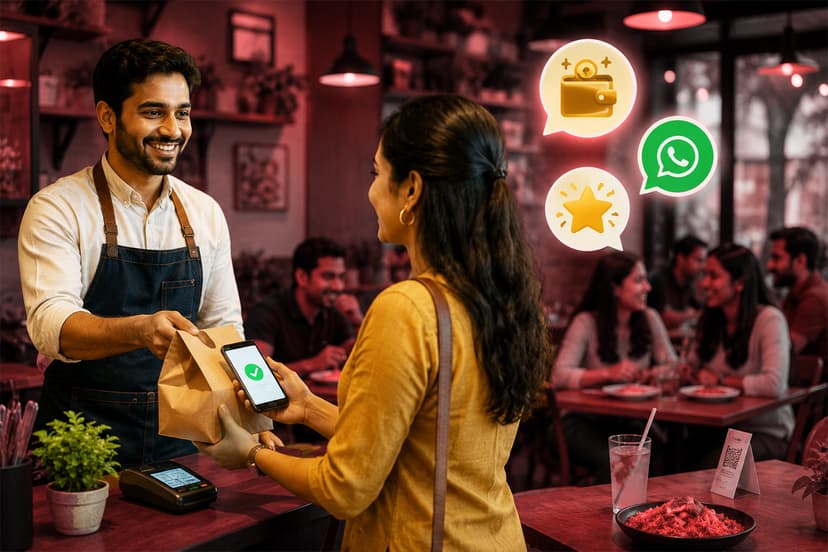
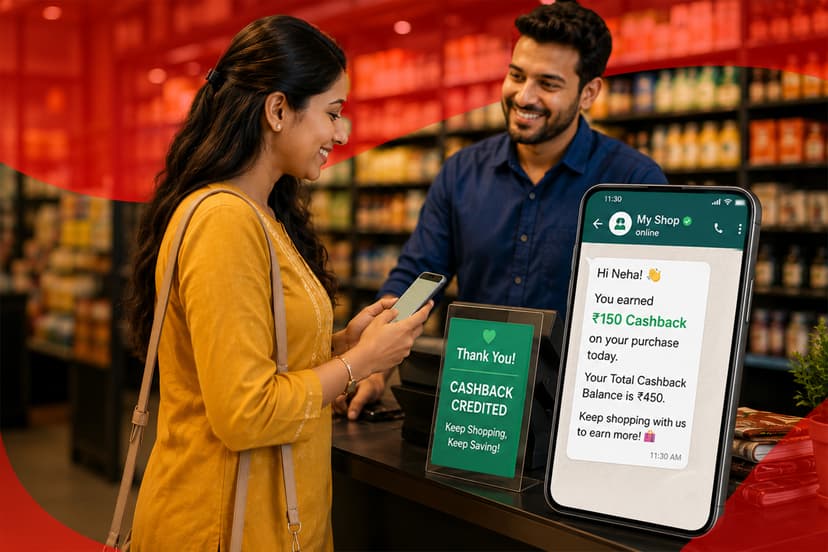
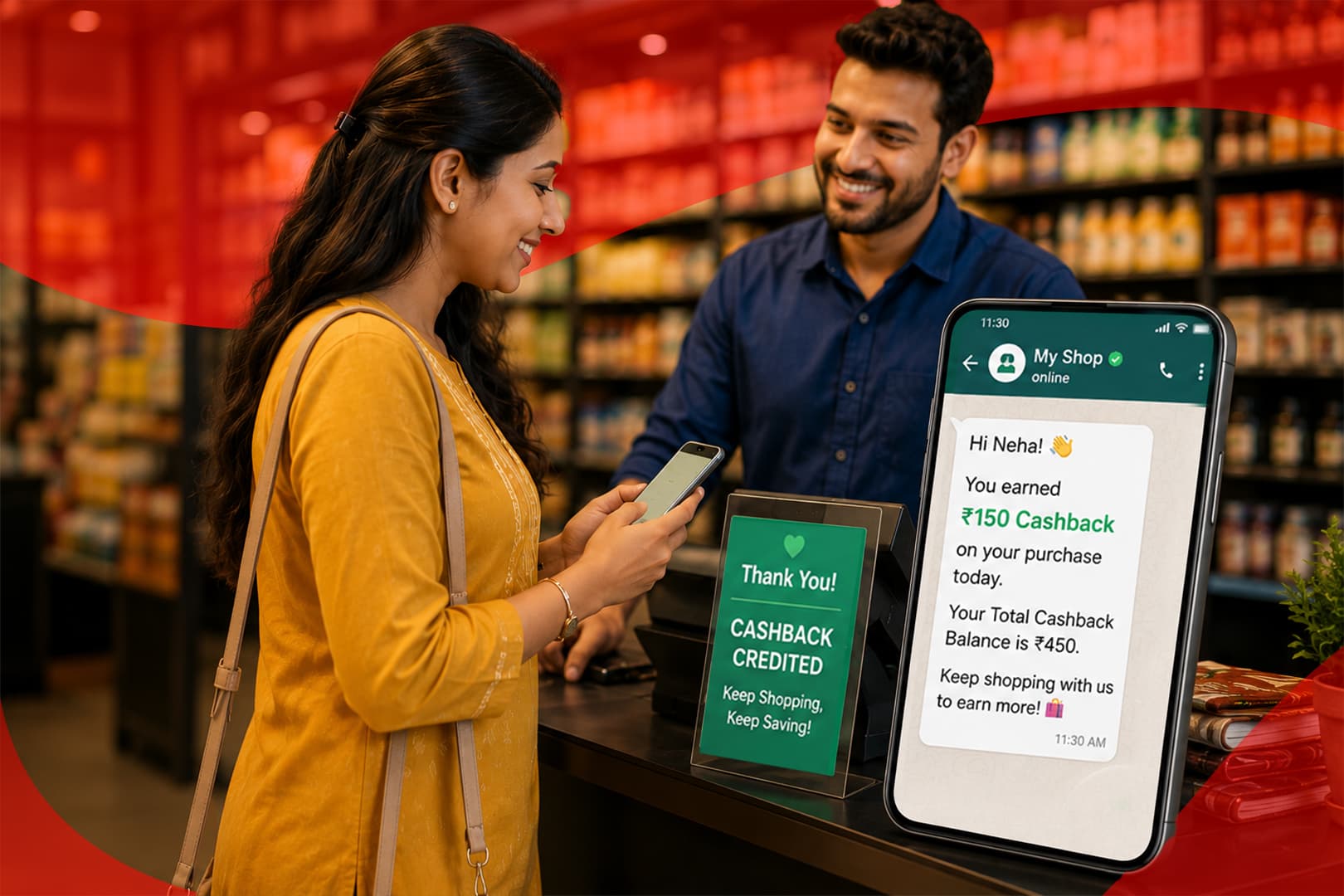
The best loyalty setups in Tier 2 India right now look like this: a customer enrolls with their mobile number at the counter, they receive a WhatsApp message confirming their cashback, and every subsequent loyalty communication (balance updates, reward reminders, win-back messages) happens over WhatsApp in simple, conversational language. No app to download, no website to navigate, no English-only interface to struggle with.
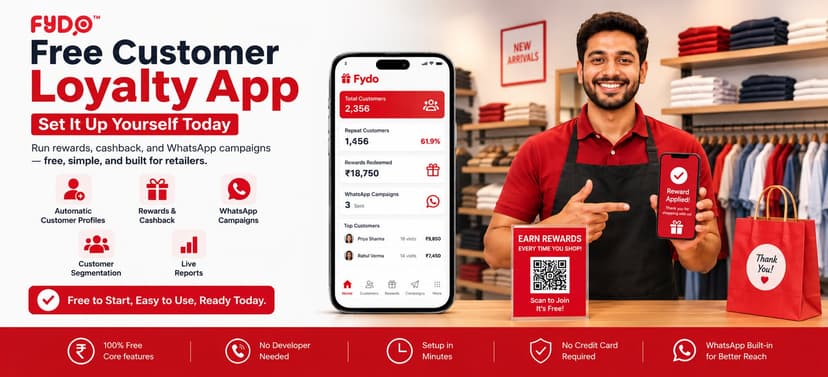
Fydo is built around exactly this model. Cashback credited automatically, communicated instantly over WhatsApp, in a format every smartphone user in India already knows how to read.
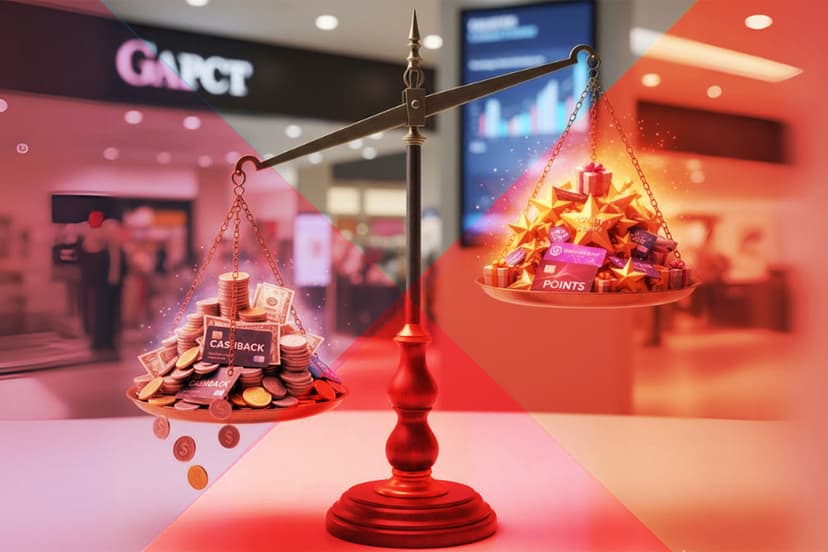
Trend 2: Cashback Beats Points in Smaller Cities
In metros, points-based loyalty programs with tiers and categories have some appeal. In Tier 2 cities, they mostly confuse people.
The data is fairly clear on this. Among Indian consumers surveyed, 68% of urban consumers and 60% of non-metro consumers cite discounts and cashback as the primary reason they join loyalty programs (Future Market Insights, 2026). The preference is even stronger in Tier 2 and 3 markets, where cashback feels tangible and immediately understandable in a way that abstract points accumulation does not.
Think about it from a customer's perspective. Walking into a store knowing that Rs. 200 is sitting in a cashback wallet ready to be used is a clear, compelling reason to return. Knowing that "you have 840 loyalty points" means almost nothing without complex mental maths to calculate its value.
There's also a trust dimension here that matters in smaller cities. Tier 2 consumers tend to be cautious about unfamiliar mechanisms. A cashback model is intuitive because it mirrors everyday UPI cashback they already understand from PhonePe and Google Pay. Points programs feel opaque in comparison, especially when the redemption rules aren't immediately obvious.
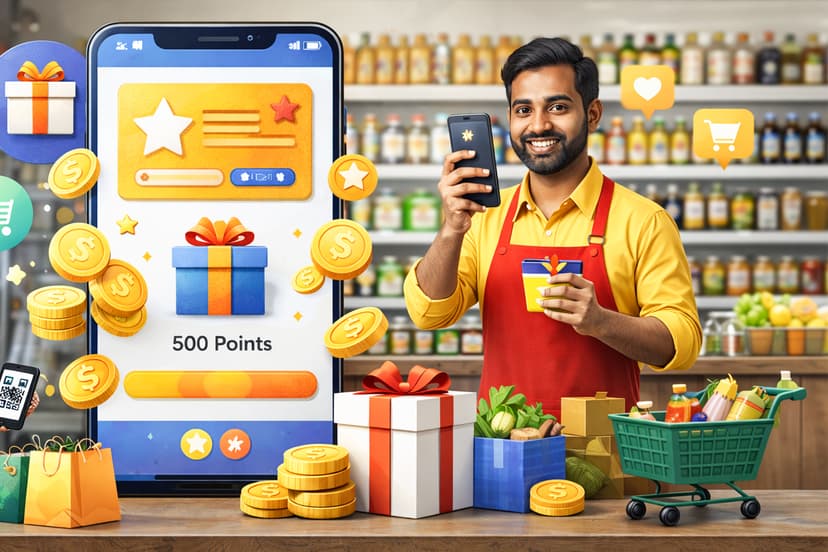
For local retailers, the practical conclusion is simple: start with cashback. A straightforward 4-5% cashback on every purchase, credited to a wallet and communicated via WhatsApp, is more effective in Tier 2 India than any complicated tiered points system.
Trend 3: Loyalty Adoption Is Expanding Beyond Metros Fast
For years, loyalty programs in India were largely an organised retail story. Reliance Retail, Apollo Pharmacy, Big Bazaar, and other chains ran loyalty programs while independent local stores were left out of the picture entirely.
That gap is closing rapidly in 2026.
Loyalty adoption is expanding beyond urban, premium consumers into mass-market and Tier 2 and Tier 3 city segments. Organised retail expansion and increasing smartphone penetration outside major metros are broadening the addressable base for loyalty programs. Retailers are using loyalty to maintain continuity across offline and online touchpoints as new consumers enter organised commerce (Research and Markets, Q1 2026).
This is both an opportunity and a warning for local independent retailers. The opportunity: your customers are ready for loyalty programs. They're already familiar with the concept from UPI apps, e-commerce platforms, and big brand interactions. They won't need to be educated on why cashback exists.
The warning: the organised players are coming to your market with loyalty programs already running. Apollo Pharmacy is expanding into Tier 2 cities with its OneApollo program. Reliance Retail continues to integrate loyalty across physical and digital formats. D-Mart runs its loyalty infrastructure at scale. If local independent retailers wait too long to build their own loyalty relationships, they'll find their customers have already been signed up to a competitor's program.
The retailer who acts first in their category in any given Tier 2 city gets a significant first-mover advantage. Once customers are enrolled in a loyalty program and have a cashback balance accumulating, the switching cost goes up meaningfully.
Trend 4: No-App Loyalty Is the Only Loyalty That Works Here
One of the most persistent mistakes retailers make when thinking about loyalty in Tier 2 India is imagining that customers will download a dedicated loyalty app.
They won't. Not at the scale that makes a loyalty program worthwhile.
App-based loyalty programs struggle even in metros outside of very large brands with significant marketing budgets. In Tier 2 cities, the barriers are even higher. Customers have limited phone storage and are selective about what they install. Convincing a customer to download, set up, and regularly use a new app for a local medical store or salon requires a level of brand pull that most independent retailers simply don't have yet.
The no-app model, where customers join via mobile number and interact entirely through WhatsApp, solves this completely. There's nothing to download, nothing to set up, no barrier to entry. The customer gives a number at the counter, receives a WhatsApp confirmation, and is enrolled. Every interaction after that happens on an app they already use dozens of times a day.
This is not a compromise on the quality of the loyalty experience. It's actually the superior approach for this market. WhatsApp is more trusted than branded apps in Tier 2 cities, more likely to be opened, and more likely to drive return visits when a message lands.
Trend 5: Word-of-Mouth Is Still Loyalty's Most Powerful Amplifier in Smaller Cities
Something important about Tier 2 cities that no data report fully captures: communities are tighter. Word travels faster. A customer who loves your loyalty program tells four people. A customer who had a bad experience tells ten.
Net Promoter Score remains highly valuable in these markets because word-of-mouth is more powerful in tightly knit Tier 2 and Tier 3 communities than in metros, where social connections are more diffuse (QuestionPro, 2026).
This has a direct implication for loyalty program design. In a metro, a loyalty program primarily benefits retention: it keeps existing customers coming back. In a Tier 2 city, a well-run loyalty program does this plus generates genuine word-of-mouth. When customers talk about your cashback program to their neighbours, relatives, and colleagues, they're doing acquisition work for you at zero cost.
The key is that the program has to be simple enough for customers to explain and exciting enough for them to want to mention it. "I got Rs. 80 cashback on my last purchase and it came on WhatsApp" is something people share. "I have 840 loyalty points that I'm not sure how to use" is not.
Fydo's cashback model is specifically designed to be easy to talk about. Customers understand it, they see the balance grow, and they mention it to people they know. In Tier 2 markets where community connections are strong, this word-of-mouth effect compounds over time into meaningful organic growth.
Trend 6: UPI Has Made Customers Comfortable With Digital Rewards
Five years ago, explaining a digital cashback wallet to a customer in a Tier 2 city would have required significant effort. Today, it takes about ten seconds.
UPI adoption in Tier 2 and Tier 3 India has been transformational. These markets now account for 71% of UPI MAU year-on-year growth (NPCI Bharat BillPay, IAMAI, FY26). Customers who use PhonePe, Google Pay, and Paytm every day already understand the concept of digital money sitting in a wallet that can be used for the next transaction.
Loyalty cashback maps directly onto that mental model. "You've earned Rs. 65 cashback. Use it next time you visit" is a concept that lands immediately with a customer who regularly uses UPI cashback offers.
This is a fundamentally different environment from even two or three years ago. The digital literacy groundwork has been laid by UPI. Local retailers who run cashback loyalty programs are building on infrastructure that already exists in customers' minds. The education barrier is essentially gone.
Trend 7: Personalisation Is Coming to Tier 2 Retail, But Simplicity Still Wins
In enterprise loyalty circles, 2026 is the year of AI-powered personalisation. Predictive analytics, behaviour-based segmentation, real-time churn risk scoring. These are real capabilities being deployed by large organised retailers.
For independent Tier 2 retailers, this level of sophistication is neither accessible nor necessary right now. What matters is getting the basics right and doing them consistently: enroll customers, track purchases, send relevant WhatsApp messages at the right moments, and reward loyalty in a way that's immediate and understandable.
The shift from pure discount-driven loyalty to points-based and cashback reward systems that offer instant redemption options is the primary move for most Indian retailers in 2026 (RewardPort, March 2026). Personalisation at scale is the next step, not the starting point.
That said, even basic personalisation is valuable and achievable. A WhatsApp message sent after 25 days of no visit is a form of personalisation. A refill reminder for a regular customer at a medical store is personalisation. A birthday cashback message is personalisation. None of these require AI infrastructure. They require a loyalty platform that tracks purchase dates and customer profiles and sends automated WhatsApp messages at the right time.
This is what tools like Fydo are built to do for independent retailers who don't have marketing teams or data science capabilities.
What Tier 2 Retailers Should Do Right Now ?
Based on these trends, the practical playbook for a local retailer in a Tier 2 city in 2026 is fairly clear.
Start with cashback, not points.
Your customers understand it immediately, trust it because it mirrors UPI, and talk about it to their social network. Keep the rate simple: 4-5% on most purchases.
Use WhatsApp as your only loyalty communication channel.
Forget email. Forget SMS for loyalty messages. WhatsApp is where your customers will see, read, and respond.
Enroll via mobile number only.
No app, no form, no friction. If enrolment takes more than 30 seconds, adoption will suffer. One mobile number, and the customer is in.
Act before the organised chains arrive in your neighbourhood.
The first retailer in any category to build a loyalty relationship with a customer has a significant advantage. Once customers have cashback balances and habits built around your store, the cost of switching rises.
Use loyalty as community currency.
In Tier 2 cities, happy loyalty customers are your best marketing channel. Make the program simple enough that they explain it to people they know.
Frequently Asked Questions
Q: Are customers in Tier 2 cities ready for digital loyalty programs?
Yes, more than ever. With smartphone penetration at 79% in Tier 2 and Tier 3 cities (TRAI, FY26) and UPI adoption driving digital wallet familiarity, customers in smaller cities are well-prepared for simple cashback and WhatsApp-based loyalty programs.
Q: Do loyalty programs work differently in Tier 2 cities compared to metros?
The mechanics are the same, but the channel and format matter more. WhatsApp outperforms email and SMS even more dramatically in Tier 2 markets. Cashback outperforms points programs more strongly. And word-of-mouth amplification is more powerful because communities are tighter.
Q: How much should I offer as cashback for a Tier 2 customer base?
3-5% is the standard range for most retail categories. The key is consistency. A reliable 4% cashback credited on every purchase and communicated via WhatsApp is more powerful than an unpredictable 10% offer that customers learn not to trust.
Q: Will organised chains make it harder for independent Tier 2 retailers to run loyalty programs?
The opposite, actually. Organised chain expansion into Tier 2 cities makes a loyalty program more important for independent stores, not less. The retailer who builds loyalty relationships with local customers before the chain arrives is significantly harder to dislodge than one who hasn't.
Q: Do I need a POS system or billing software to run a loyalty program?
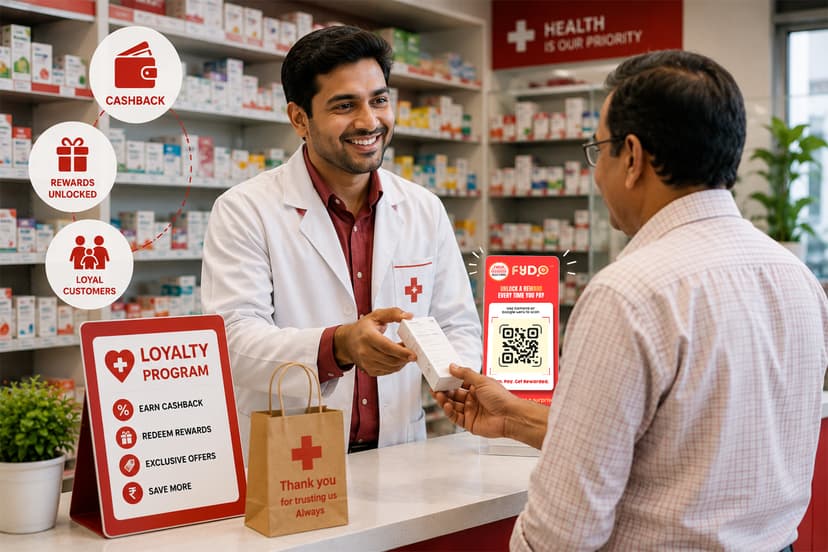
Not with the right tool. Fydo works completely independently of POS systems, which is exactly why it's built for the independent retailer reality across Tier 2 India, where most shops don't use formal POS infrastructure.
The Bottom Line
Tier 2 India is not the future. It's the present. The growth is here, the digital readiness is here, and so is the competition.
Local retailers in smaller cities have always had the relationship advantage over organised chains and e-commerce platforms. What they've been missing is a simple, affordable way to formalise those relationships and make them structurally sticky.
That's what loyalty programs do in 2026, and the tools available today make it genuinely accessible for any independent retailer, with no POS requirement, no customer app, and no IT team needed.
The Tier 2 retailer who builds a cashback loyalty program on WhatsApp this month is building something that will quietly compound in value every single month. Every enrolled customer is a relationship that becomes harder to poach. Every cashback balance is a pull to return. Every WhatsApp message is a touchpoint that an e-commerce platform cannot replicate.
Fydo was built for exactly this kind of retailer, in exactly these kinds of cities. Simple setup, WhatsApp-first, cashback-based, and designed for the way independent Indian retail actually works.
Want to see how Fydo works for your store in your city? [Start your loyalty program today - https://fydo.in]
Running a retail business in a Tier 2 city and want to know which loyalty approach suits your category? Drop a message and we will get back to you.
Sources: TRAI Smartphone Penetration Report FY26 | Meta India Q4 FY26 WhatsApp Business Data | Bain India Bharat Outlook 2026 | NPCI Bharat BillPay UPI Data FY26 | IAMAI Internet and Mobile Association India FY26 | PwC India Festive E-Commerce Report 2026 | Future Market Insights India Loyalty Program Market 2025-2035 | Research and Markets India Loyalty Card Market Q1 2026 | RewardPort Retailer Loyalty Programs India 2026 | QuestionPro Consumer Behaviour India 2026 | Whalesbook India Tier 2 Retail Boom 2026 | RichAutomate WhatsApp Tier 2 Tier 3 India Expansion FY26