Loyalty Programs for Medical Stores and Pharmacies in India
By Fydo Team
Schedule a free consultation
Here's a question most medical store owners don't think about until it's too late.
When was the last time a customer walked into your shop specifically because they wanted to come back to you, not just because you happened to be the closest option?
For most independent chemists and medical store owners in India, the honest answer is uncomfortable. Customers buy medicines because they need them, not because they feel any particular pull toward your shop over the one three streets down. And with Apollo Pharmacy running over 6,000 stores across India, MedPlus operating 5,300 locations across 600 cities, and online platforms like 1mg and PharmEasy just a tap away, "closest option" is no longer the reliable advantage it used to be.
But here's what most independent medical store owners don't realise: you have an advantage that Apollo, MedPlus, and every e-pharmacy platform cannot easily replicate. You know your customers personally. You know the uncle who comes in every month for his diabetes medication. The young mother who buys her baby's supplements from you. The family that has been buying from your counter for fifteen years.
That relationship is your real asset. A loyalty program is how you formalise it, scale it, and make sure those customers never feel the pull to go elsewhere.
The Pharmacy Market in India Right Now
India's pharmaceuticals market is projected to reach $60.32 billion in 2026 and grow to $79.74 billion by 2031, at a CAGR of 5.74%. That's a massive market, and it's growing steadily thanks to rising chronic disease rates, better healthcare awareness, and an ageing population that needs medication every single month.
But the structure of this market is changing fast, and not entirely in favour of independent stores.
The Indian pharmacy retail landscape remains heavily skewed toward unorganised outlets, with local medical stores comprising approximately 88% of total retail pharmacies. That sounds reassuring until you look at the trajectory. Organised chains like Apollo and MedPlus are expanding aggressively into Tier 2 and Tier 3 cities, the very markets where most independent chemists operate.
Independent pharmacies in India are increasingly facing competition from organised chains and franchise models that offer standardised services, better supply chain efficiencies, and stronger brand recognition.
The playing field is tilting. The question is what you do about it.
Why Medical Stores Are Actually Perfect for Loyalty Programs
Most people think of loyalty programs as something for coffee shops or clothing stores. Medical stores feel different, more transactional, more need-driven.
But that thinking misses something important. Medical stores may actually be the single best category for a loyalty program in Indian retail. Here's why.
Your customers buy on a predictable schedule. Someone managing diabetes or hypertension buys the same medicines every 30 days without fail. A mother with a young child buys vitamins, baby products, and OTC medicines on a fairly regular cycle. These aren't occasional shoppers. They're monthly visitors by necessity.
Your customers are looking for a reason to choose one store over another. Unlike restaurants where people actively want to try new places, medicine buyers mostly want a reliable, trustworthy chemist they can depend on. Give them a reason to trust you specifically, and they rarely leave.
The lifetime value of a loyal pharmacy customer is enormous. A patient on chronic medication spending Rs. 1,500 per month is worth Rs. 18,000 per year. If they stay loyal for five years because of a simple cashback program, that's Rs. 90,000 in revenue from one customer. The cost of the cashback payout is a fraction of that.
Repeat visits are the lifeblood of a pharmacy, especially for front-of-store and over-the-counter products where customers have plenty of options. A loyalty program does one thing above everything else: it gives your most valuable customers a small, tangible reason to keep walking through your door instead of downloading an app or walking to the chain pharmacy that just opened nearby.
The Real Threat: What Apollo and MedPlus Are Already Doing
It would be a mistake to think that organised chains aren't already playing the loyalty game.
Apollo Pharmacy runs its OneApollo loyalty programme, where customers earn Health Credits on qualifying purchases: 1% for Silver members, 1.5% for Gold, and 2% for Platinum. MedPlus offers cashback and loyalty points via its app, with regular SMS and email updates on offers and products.
These programs are well-funded, well-designed, and actively pulling customers away from independent stores. Every time a customer earns Health Credits at Apollo, they have a financial reason to go back to Apollo next month. Every time a MedPlus app user gets a cashback notification, they're being reminded that MedPlus rewards their loyalty.
Independent medical store owners who don't have any loyalty mechanism are competing with one hand tied behind their back. Not because their medicines are worse or their service is inferior, but because they're giving customers no structured reason to return.
The good news is that you don't need Apollo's budget or MedPlus's app infrastructure to run an effective loyalty program. You just need something simple, consistent, and personal. That's where independent stores have a genuine edge if they use it.
What Kind of Loyalty Program Works for a Medical Store?
Not all loyalty models suit a medical store environment. Here's what actually works for independent chemists in India.
1. Cashback on Every Purchase
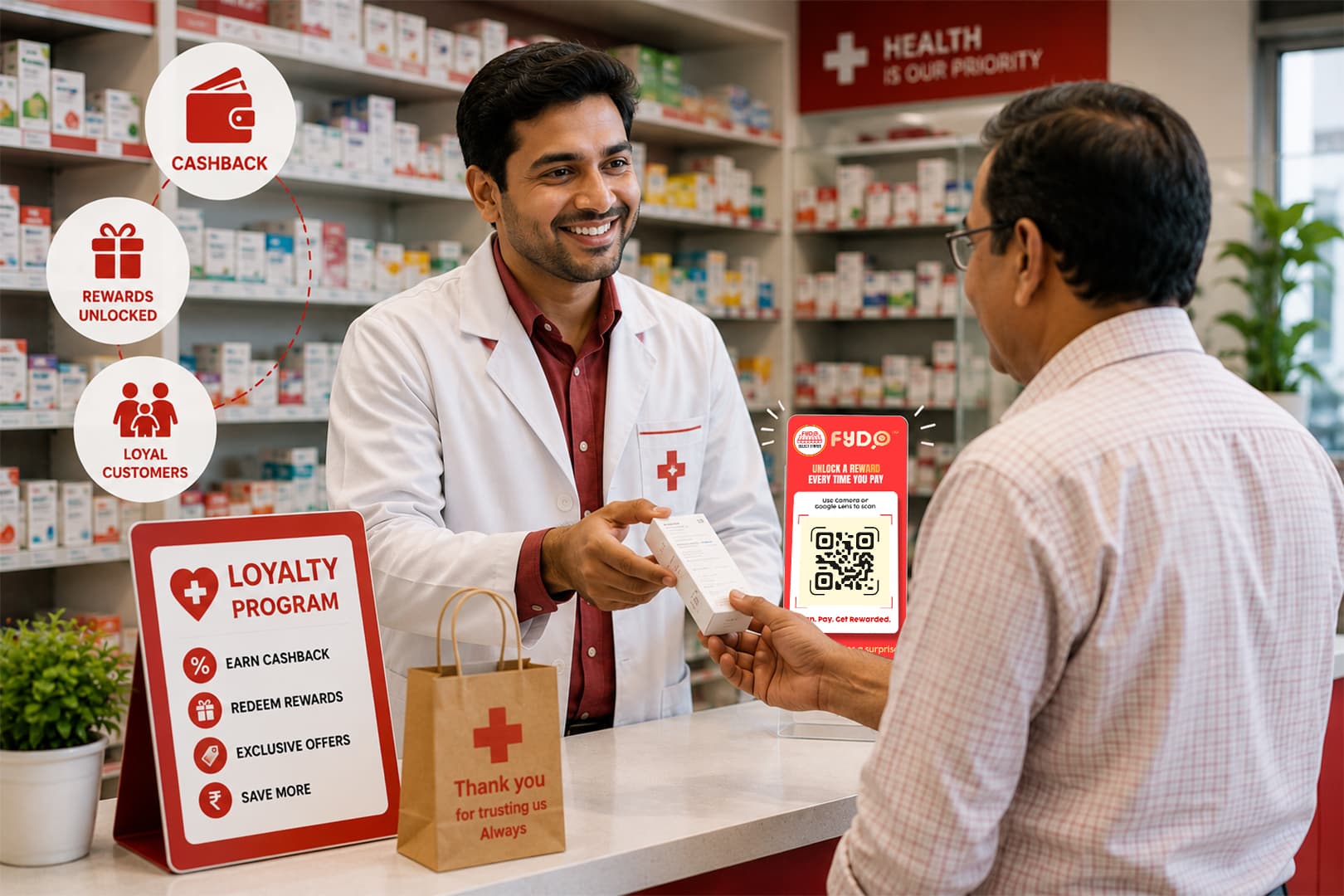
This is the simplest and most effective starting point for most medical stores. Every time a customer makes a purchase, a small percentage (typically 3-5%) is credited to their account as cashback, redeemable on their next visit.
Why does this work so well for pharmacies? Because it mirrors the purchase pattern perfectly. A customer who buys medicines every month will accumulate cashback steadily and redeem it regularly. The cashback becomes a quiet, consistent reminder that your store rewards their loyalty. It doesn't require them to remember a card, track points, or download anything. They just show up, buy, and their balance grows.
2. OTC and Wellness Purchase Rewards
Prescription medicines in India have government-regulated margins, which limits how much flexibility you have on those sales. But over-the-counter products, vitamins, baby care, personal care, and wellness supplements are where independent stores have more room.
A smart loyalty program focuses reward points or higher cashback rates on OTC purchases. This drives customers toward higher-margin products while rewarding behaviour that benefits both sides. A customer buying baby vitamins from you regularly because they get 5% cashback is a customer who isn't buying those same vitamins on 1mg.
3. Refill Reminders Paired With Rewards
This is one of the most underused tools in independent pharmacy loyalty. If you know a customer buys 30 days of blood pressure medication every month, a WhatsApp message on day 25 saying "Your Amlodipine refill is due soon, and you have Rs. 45 cashback waiting for you at our store" is extraordinarily effective.
It's not just a reminder. It's a reminder with a financial pull. The customer was going to buy anyway. Now they have a specific reason to buy from you rather than from wherever happens to be convenient that day.
4. Family Enrollment
Medical store customers often buy for the whole family. Extending the loyalty program to cover family purchases under one account increases the average monthly spend tracked under that customer, which means faster cashback accumulation and stronger retention.
This is something Apollo and MedPlus do through their apps. Independent stores can do the same thing with a simple mobile-number-based system. One family, one number, all purchases credited to the same wallet.
The Numbers: What Loyalty Actually Does for a Medical Store
Let's make this concrete.
Say your medical store has 400 regular customers who buy at least once a month. Average monthly spend per customer is Rs. 800. Without any loyalty program, you're relying entirely on habit and convenience to bring them back.
That's 400 customers x Rs. 800 = Rs. 3,20,000 per month in recurring revenue.
Now consider this. A well-structured pharmacy loyalty program can result in a 20% boost in customer retention. Even a modest 15% improvement in visit frequency (which is conservative for a category with this level of purchase regularity) changes your picture significantly:
400 customers x Rs. 800 x 1.15 = Rs. 3,68,000 per month
That's Rs. 48,000 more per month, or nearly Rs. 5.8 lakh more per year, from the same customer base. With a 4% cashback payout, your program costs roughly Rs. 12,800 per month to run. The return is nearly four times the cost.
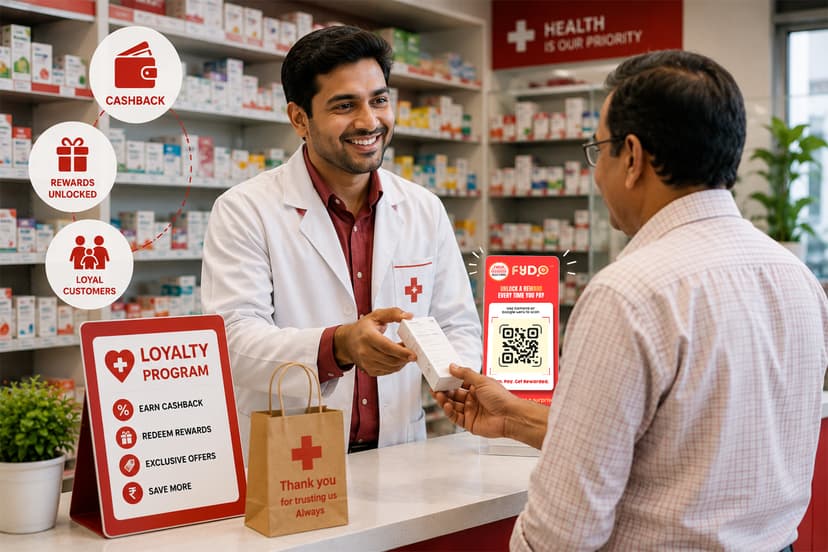
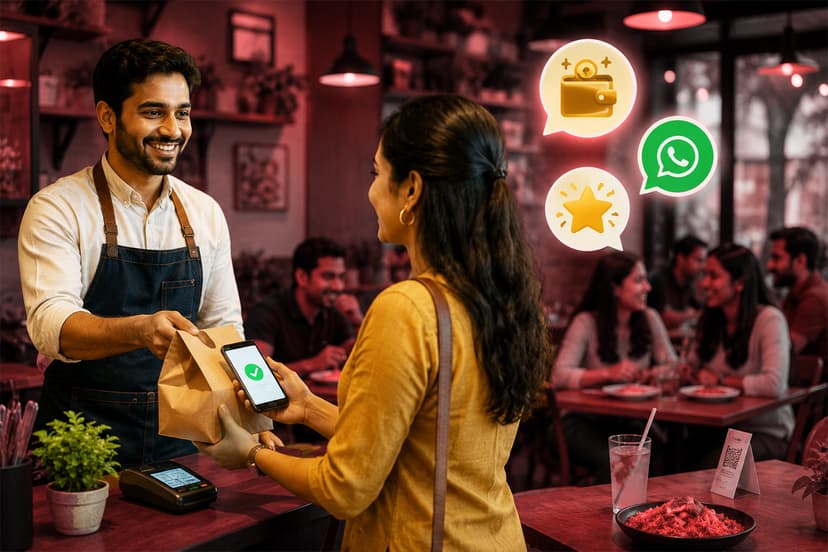
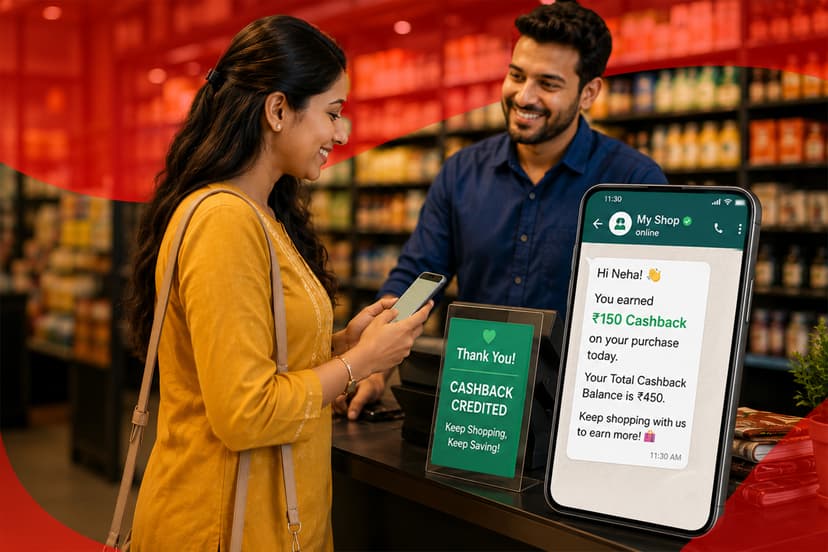
This is exactly where Fydo fits in. A simple cashback program, set up in a day, requiring no POS system, and running entirely through WhatsApp. The store owner records the bill amount, the cashback is credited automatically, and a WhatsApp message goes to the customer confirming their balance. No app for the customer to download, no complicated hardware, no monthly IT support bill. Just a straightforward system that quietly builds loyalty one transaction at a time.
Why "My Customers Will Always Come Back" Is a Dangerous Assumption
The most common reason independent medical store owners give for not running a loyalty program is this: "My customers are regulars. They always come back."
And for now, that might be true. But it's worth understanding why customers come back, and whether that reason is durable.
Most pharmacy customers are loyal by default, not by choice. They come back because your store is nearby, because they've been coming for years, and because switching takes effort they haven't gotten around to yet. That's a fragile kind of loyalty. It evaporates the moment an Apollo store opens in their neighbourhood, the moment their son shows them the 1mg app, or the moment they have one bad experience at your counter.
Loyalty programs are rarely the reason consumers choose a brand initially. Instead, they act as reinforcement mechanisms once basic trust and habit are established. This is exactly the point. Your existing regulars already trust you. A loyalty program converts that trust into something more durable, a financial and emotional reason to stay that exists independent of whether Apollo just opened nearby.
The time to build that reinforcement is before you need it, not after you've started losing customers.
Common Mistakes Medical Store Owners Make
"My margins are too thin for cashback"
This is the most common objection, and it's understandable. Pharmacy margins in India are genuinely tight, especially on prescription drugs. But the math works when you run it properly. A 3-4% cashback on total purchases, funded by improved retention and higher OTC sales, generates a net positive return in almost every scenario. The question isn't whether you can afford a loyalty program. It's whether you can afford to keep watching customers drift to Apollo without any retention mechanism in place.
"Only big chains can run loyalty programs"
This was true ten years ago when loyalty software required expensive POS integration and dedicated IT staff. It's not true in 2026. Tools like Fydo are built specifically for independent stores without POS systems, with setup that takes less than a day and communication that runs entirely through WhatsApp. The technology gap that used to separate independent stores from organised chains on loyalty no longer exists.
"My customers are older and won't engage with a digital program"
The assumption that older customers won't use technology undersells them significantly. You don't need your customers to download an app or navigate a loyalty portal. All they need to do is give their mobile number at the counter. Every WhatsApp message they receive after that is something almost every Indian smartphone user over 40 already knows how to read and reply to.
"I'll set it up when things are less busy"
There's never a quiet month in a medical store. The best time to start is now, when you still have your regulars and haven't yet lost them to a chain that opened nearby. Every month without a loyalty program is a month where your best customers are building habits with no particular pull toward you specifically.
How to Launch a Loyalty Program for Your Medical Store: Step by Step
Step 1: Choose your cashback rate
Start with 3-5% cashback on all purchases. If your margins on prescription drugs are very thin, you can run a slightly lower rate (2-3%) on prescriptions and a higher rate (5-7%) on OTC and wellness products to protect profitability.
Step 2: Set up mobile-number-based enrolment
When a customer comes to the counter, ask for their mobile number. That's it. No form, no app, no waiting. Fydo creates the loyalty wallet instantly and sends them an automatic WhatsApp confirmation showing their cashback balance. The enrolment takes under 30 seconds.
Step 3: Turn on WhatsApp communication
Set up three automatic messages: cashback credited after each purchase, balance reminder when they haven't visited in 25 days, and a refill reminder for customers on chronic medication. These three touchpoints alone cover the full loyalty lifecycle for most pharmacy customers.
Step 4: Brief your counter staff
Your staff is the entire front-end of this program. A one-time briefing of 10 minutes covering why it matters and how to ask for the mobile number is all it takes. A simple script like "Would you like to earn cashback on today's purchase?" works better than any complicated explanation.
Step 5: Give it 90 days
Pharmacy loyalty builds slightly slower than restaurant loyalty because purchase frequency, while regular, is monthly rather than weekly. The first month is enrollment. The second month is first redemptions. By month three, you'll see a measurable pattern in repeat visits and average spend.
Frequently Asked Questions
Q: Can I run a loyalty program without a POS or billing software?
Yes. Fydo works completely independently of any POS or billing system. The counter staff simply enters the bill amount in the app, and the cashback is credited and communicated to the customer automatically via WhatsApp.
Q: What about prescription medicines where margins are regulated?
You can set different cashback rates for different product categories. Many medical stores run a lower cashback rate on prescription drugs and a higher rate on OTC, vitamins, and wellness products. Fydo supports this kind of flexible setup.
Q: My customers are mostly senior citizens. Will they use this?
They don't need to "use" anything. They give their mobile number at the counter and receive a WhatsApp message. For customers who have family members managing their medicines, the family member typically engages with the loyalty messages. Either way, the retention benefit is the same.
Q: How do I handle customers who buy for their whole family?
Register them under one mobile number. All purchases made under that number accumulate cashback in the same wallet. This actually increases the monthly spend tracked per customer and speeds up cashback accumulation, which strengthens retention.
Q: Is it worth setting up a loyalty program if I have only 200 customers?
Absolutely. In fact, smaller customer bases often see higher percentage returns from loyalty programs because each individual customer relationship matters more. If a loyalty program prevents 30 of those 200 customers from drifting to Apollo over the next year, the revenue impact is significant and measurable.
The Bottom Line
Running an independent medical store in India in 2026 means competing with organised chains that have loyalty programs, apps, and marketing budgets you can't match directly. That's just the reality.
But you have something they can't buy: genuine relationships with your customers. The uncle who trusts your advice on generic substitutes. The family that has bought from your counter for a decade. The young mother who knows you'll always have her child's brand in stock.
A loyalty program doesn't replace those relationships. It protects them. It gives your most valuable customers a small, consistent reason to choose you every single month, even when Apollo is around the corner and PharmEasy is one tap away.
For independent medical stores, Fydo makes this simple. No POS required, no customer app to download, no IT overhead. Just cashback on every purchase, delivered through WhatsApp, with automated reminders that bring customers back before they drift away. Set it up once, and let it quietly do the work of keeping your regulars exactly where they belong: with you.
Want to see how Fydo works for medical stores and pharmacies?
Start your loyalty program today - https://fydo.in
Have questions about running a loyalty program for your medical store or pharmacy?
Drop them in the comments and we'll help you figure out what works for your setup.
Sources: Mordor Intelligence India Pharmaceuticals Market Report 2026 | Credence Research India Retail Pharmacy Market 2026 | Nexdigm India Pharmacy Retail Market Report 2025 | Mobility Foresights India Retail Pharmacy Market 2026 | Loopy Loyalty Pharmacy Loyalty Program Guide January 2026 | Leafio Pharmacy Loyalty Program Report February 2026 | Almonds Ai Channel Loyalty Report 2026 | Market Xcel Consumer Loyalty India 2026 | MedPlus Wikipedia Company Profile 2026 | Scribd Apollo vs MedPlus CRM Practices Comparison