Why Your Customers Are Not Coming Back (And How to Fix It)
In this article
Schedule a free consultation
There is a question that keeps a lot of Indian shop owners awake at night, even if they have never said it out loud.
Why did they not come back?
The food was good. The product was fine. Nobody complained. And yet the same faces that walked in last month are nowhere to be seen this month. You find yourself wondering what you did wrong.
Here is the uncomfortable truth: in most cases, you did not do anything wrong. You just did not do enough right.
More than 52% of consumers have stopped buying from a brand because of a bad experience (PwC, 2025). But the majority of customers who do not return never had a bad experience at all. They left because nothing gave them a reason to stay. No pull. No reminder. No reward. Just silence after that first purchase, and a world full of other options ready to fill the gap.
This blog breaks down the seven most common reasons customers stop returning to Indian retail shops, and what you can do right now to fix each one.
Reason 1: You Had No Way to Stay in Touch After They Left
Think about the last time a customer walked out of your shop. What happened next?
For most independent retailers in India, the honest answer is: nothing. The customer left, took their purchase home, and that was the end of the relationship until they happened to walk past again.
This is the single biggest reason customers do not return. Not bad service. Not better competition. Just the complete absence of any follow-up that reminds them you exist.
More than 70% of customers will abandon a brand they otherwise trust after a single negative experience. But that same research found that those consumers described themselves as "satisfied" with the brands they left. Satisfaction alone does not guarantee a return visit. Something has to actively pull customers back.
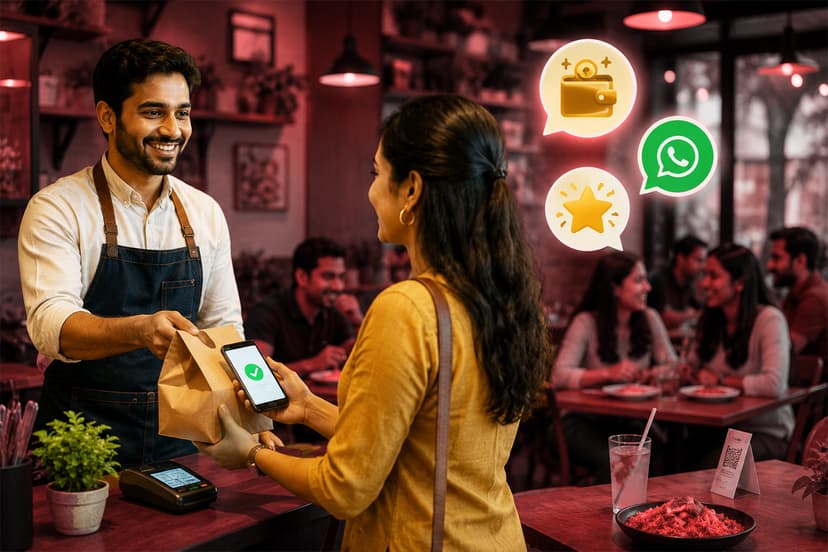
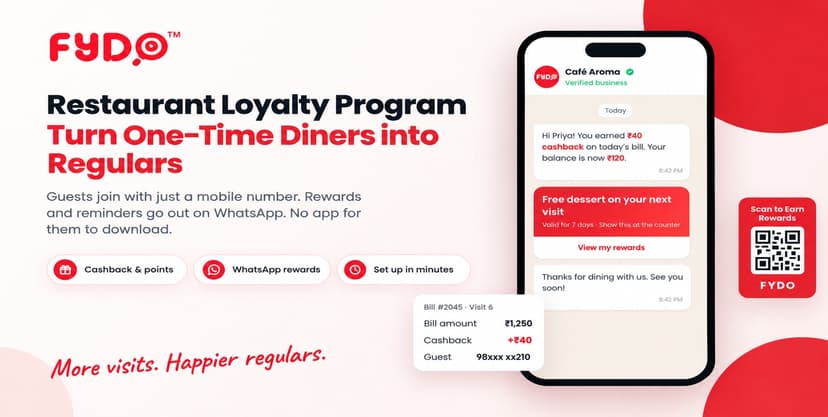
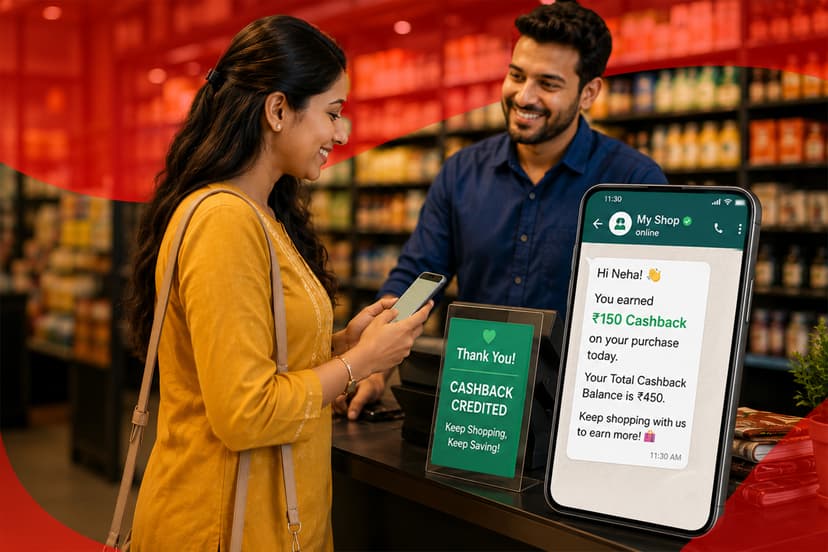
In 2026, that pull comes from WhatsApp. A message three days after a visit saying "Your Rs. 45 cashback is waiting for you" is not just a reminder. It is proof that your shop remembers them, values their custom, and is giving them something in return for their loyalty.
The fix: Set up automated WhatsApp messages that go out after every purchase. A cashback confirmation on the day of the visit, a balance reminder after one week, and a win-back message after 25 days of no return covers the full post-purchase lifecycle for most retail categories. With Fydo, this runs automatically. You set it up once and it works silently in the background for every customer, every time.
Reason 2: You Gave Them No Reason to Choose You Over Anyone Else
Your shop is good. But so is the one two streets away. And the one on Swiggy Instamart. And the one that just opened in the mall nearby.
When everything else is roughly equal, the deciding factor becomes: where do I have something waiting for me?
This is the psychology of loyalty in its simplest form. A customer who has Rs. 60 of cashback sitting in a wallet at your shop is not in a neutral position about where to buy next time. They have a financial reason to come back to you specifically. That small balance is a form of switching cost that did not exist before.
In 2026, loyalty programs have evolved into retention, engagement, and customer intelligence platforms. Many businesses still view loyalty programs as discount engines. That approach is outdated. A discount reduces your price for everyone. A cashback loyalty program rewards the specific customers who keep coming back, and creates a quiet but persistent pull that generic discounting can never replicate.
The fix: Launch a simple cashback program. 4-5% on every purchase, credited to a wallet linked to the customer's mobile number. No app to download, no card to carry. The customer earns on every visit and always has a balance waiting that makes your shop the obvious choice next time.
Reason 3: The First Experience Was Fine but Forgettable
There is a version of a retail experience that is perfectly acceptable and leaves absolutely no impression.
The customer got what they came for. Staff were polite but not warm. No friction, but no moment that made the visit feel worth remembering. They walked out satisfied, in the bland sense of the word, and that satisfaction did not translate into any pull to return.
After one terrible experience, almost 30% of customers stop interacting with a business. But the inverse is equally true and less discussed: a genuinely memorable first experience significantly increases the probability of a second visit. The middle ground, acceptable but unremarkable, is where most lost repeat customers come from.
In Indian retail, especially in Tier 2 cities where communities are tight and word travels fast, the difference between a forgettable visit and a memorable one is usually small. It is the shopkeeper who remembers that a customer's daughter has a nut allergy. The counter staff who spots that someone is browsing the same product they bought last time and asks if they would like the same again. The cashback notification on WhatsApp that arrives within minutes of the purchase, making the customer feel like they are part of something.
The fix: Before a customer leaves, give them one thing to come back for. A cashback balance, a refill reminder, or simply a genuine "see you next time" that feels specific rather than scripted. The enrollment moment for a loyalty program is one of the most underused opportunities in Indian retail. "Let me set up your cashback account so you earn on today's visit" takes 30 seconds and plants the seed of a return visit at the exact moment the customer is most receptive.
Reason 4: Your Best Customers Feel Exactly the Same as Everyone Else
There is a customer who has been coming to your shop for three years. They spend Rs. 2,000 a month without fail. They have sent two of their colleagues your way. They have never once complained.
Do they know that you value them differently from someone who walked in for the first time last Tuesday?
In most independent Indian retail shops, the honest answer is no. Everyone gets the same price, the same service, the same experience. There is no signal to a long-term loyal customer that their history with you has any meaning.
Research from Bain and Company found that increasing customer retention by just 5% can increase profits by 25% to 95%. Bain also reports that 53% of marketing budgets are now focused on existing customers rather than acquiring new ones.
The retailers driving this shift understand something important: your best customers are not just revenue. They are your most powerful marketing channel. But they will only stay loyal, and only refer others, if they feel their loyalty is recognised and rewarded.
The fix: Use your loyalty platform to identify your top customers by spend and visit frequency. Once you know who they are, treat them differently in small but meaningful ways. A slightly higher cashback rate once they cross a spending milestone. A personal WhatsApp message before a big festival. An early heads-up about new stock. These cost almost nothing but signal clearly that you see them as a valued regular, not just another transaction.
Reason 5: Too Much Friction at the Wrong Moments
Sometimes customers do not return because something in the experience was just slightly harder than it needed to be.
Not hard enough to complain about. Just hard enough to tip the balance toward a competitor who makes the same thing a little easier.
A long wait during a busy period. A payment method that was not accepted. A loyalty card they were asked to show that they had forgotten at home. A WhatsApp message they had to find in their phone memory because there was no notification that their balance had updated.
Behavioural economists have long warned against overestimating loyalty. The effort heuristic explains why consumers favour brands that minimize cognitive and physical effort. Habit loops explain why defaults persist until disrupted. One confusing interface can undo months of consistent service.
In India in 2026, customers have been conditioned by UPI, Blinkit, and Zomato to expect things to be fast and frictionless. Every extra step in your customer experience is a small reason to go somewhere that has fewer steps.
The fix: Walk through your own customer experience as if you are a first-time visitor. Where does something take longer than it should? Where do customers have to ask questions that should have been answered automatically? Where does your loyalty program add a step instead of removing one? The no-app, mobile-number-only enrollment model that Fydo uses exists precisely to eliminate friction at the most critical moment, the point where a customer decides whether to join your loyalty program or skip it.
Reason 6: You Competed on Price When You Should Have Competed on Relationship
Discounts feel like loyalty. They are not.
A customer who comes back because you are cheaper this week is not loyal. They are price-sensitive. The moment a competitor runs a better discount, they are gone.
The reality is simple: customer loyalty cannot be taken for granted. It must be continuously nurtured through meaningful engagement, personalized experiences, and rewards that give customers a compelling reason to stay. Many businesses still view loyalty programs as discount engines. That approach is outdated.
In Indian retail, the discount trap is especially common. Shop owners see a slow week and immediately drop prices or run an offer, which brings in footfall but trains customers to wait for deals rather than come regularly at full price.
The alternative is to compete on relationship rather than price. A customer who feels known, rewarded, and valued does not compare your price with the shop down the street. They come to you because you are their shop. That relationship is almost impossible for a competitor to replicate, however low they drop their prices.
The fix: Shift the framing from "how do I attract customers with deals?" to "how do I make my existing customers feel valued enough to stop comparing prices?" Cashback rewards them for loyalty without reducing the price. Personalised WhatsApp messages make them feel known. Milestone rewards for reaching spend thresholds make them feel recognised. None of these require you to cut margins. All of them build something that discounting actively destroys.
Reason 7: You Did Not Know They Were Leaving Until It Was Too Late
The most insidious version of customer churn is the one you do not see happening.
A customer visits every week for six months. Then every two weeks. Then once a month. Then not at all. At no point did they tell you they were drifting. At no point did you have a system that flagged their declining frequency. By the time you noticed the face was missing, they had already built a new habit somewhere else.
70% of consumers say they will abandon a brand after just two negative experiences, while nearly a quarter will stop purchasing from a brand after only one bad experience. But many more leave without any negative experience at all. They simply drift, and in the absence of any pull to stay, drifting is the path of least resistance.
This is where data matters enormously. A retailer with a loyalty system that tracks visit frequency can see a customer going from weekly to fortnightly visits and act on it before they stop coming entirely. A well-timed win-back message at day 20 of no visit costs almost nothing to send and recovers a meaningful percentage of drifting customers before they are fully gone.
The fix: Set up a win-back automation. Any customer who has not visited in 20-25 days gets an automatic WhatsApp message reminding them of their cashback balance and inviting them back. This single automation, built into Fydo and running silently in the background, recovers customers who would otherwise have drifted away unnoticed. You do not have to identify them manually or remember to follow up. The system does it for you, for every customer, every time.
The Common Thread Across All Seven Reasons
Reading through these, you may have noticed something. None of the seven reasons customers stop returning is about your products being bad, your prices being too high, or your service being poor.
They are all about the absence of something: follow-up, differentiation, memorability, recognition, frictionlessness, relationship, and visibility into who is drifting.
This is both the challenge and the opportunity. The challenge is that these gaps are invisible. You cannot see a customer who did not return. You cannot measure the impact of a WhatsApp message you never sent. You cannot know which customers are drifting if you have no system tracking their visit frequency.
The opportunity is that fixing these gaps does not require a big budget, a large team, or complex technology. It requires a simple, consistent loyalty program that captures customer data at the point of purchase, rewards loyalty in a way customers understand, and communicates with them through the channel they already use every day.
That is what Fydo is built to do. Simple cashback on every purchase, automated WhatsApp communication at the right moments, and the visibility to know which customers are engaged and which ones are starting to drift, before they are gone.
A Quick Self-Assessment for Your Shop
Before you close this page, answer these five questions honestly:
- Do you know the mobile number of at least 70% of your regular customers?
- Does every customer get a WhatsApp message within 24 hours of their visit?
- Can you name your top 10 customers by spend right now, without guessing?
- Do you have any automated follow-up that goes to customers who have not visited in three weeks?
- Do your loyal regulars get anything different from a first-time visitor?
If you answered no to three or more of these, the seven reasons above are almost certainly costing you repeat customers every single month. Not because of anything dramatic. Just the quiet accumulation of small gaps that, together, add up to a lot of customers who do not come back.
The good news is that all five of these gaps can be closed in a day with the right setup.
Frequently Asked Questions
Q: How do I know which customers are at risk of not returning?
Any customer who has not visited in 20-25 days is entering the at-risk window for most retail categories. A loyalty platform that tracks visit dates lets you identify these customers automatically and trigger a win-back message before they fully disengage.
Q: Is it possible to win back customers who have already stopped coming?
Yes, but the window shrinks fast. A customer who has not visited in 30 days is recoverable with the right message and incentive. A customer who has not visited in 90 days has usually built a new habit elsewhere and is significantly harder to bring back. The key is catching people in the 20-40 day window.
Q: What should a win-back WhatsApp message say?
Keep it simple and personal. "Hi [Name], we have not seen you in a while. Your Rs. [amount] cashback is still waiting for you at [Shop Name]. Hope to see you soon." This works because it is personal, it references something specific (their balance), and it creates a low-pressure reason to return.
Q: Do I need to offer a big discount to bring customers back?
No. A cashback balance reminder is more effective than a new discount for most customers, because it references something they already earned rather than introducing a temporary price cut that trains them to expect deals.
Q: What if my shop is too small to run a loyalty program?
There is no minimum size for a loyalty program. In fact, smaller shops often see higher returns because every individual customer relationship matters more and communication feels more personal. Fydo works for shops with 50 regular customers just as effectively as for shops with 5,000.
The Bottom Line
Customers do not stop coming back because they disliked you. They stop coming back because nothing pulled them forward.
The fix is not complicated. Know who your customers are. Stay in touch with them through WhatsApp. Give them a financial reason to return in the form of cashback. Recognise your best customers differently. And have a system that flags when someone is starting to drift so you can act before they are gone.
Fydo was built to make all of this possible for any independent retailer in India, with no POS required, no customer app to download, and setup that takes less than a day. The result is not just more repeat visits. It is the kind of steady, compounding customer base that makes your revenue predictable, your word-of-mouth genuine, and your business genuinely difficult for a competitor to take away.
Is your shop losing customers you did not know you had? [See how Fydo helps Indian retailers build lasting loyalty - https://fydo.in]
Have a question about why your customers are not returning or how to fix it? Drop it in the message and we will help you work through it.
Sources: PwC Customer Experience Survey 2025 | Novus Loyalty Retail Merchant Churn Report June 2026 | Emplifi State of Consumer Brand Engagement 2025 | Jodie Shaw The Mind of the Modern Consumer May 2026 | Bain and Company Customer Retention Research | Hansa Research Consumer Behaviour in Retail Industry 2026 | WifiTalents Repeat Customer Data Report 2026