How to Increase Repeat Customers for Your Retail Shop in India
By Fydo Team
Schedule a free consultation
Here is a number worth sitting with for a moment.
The success rate of selling to an existing customer is 60-70%. The success rate of selling to a brand new one is 5-20% (WifiTalents, February 2026).
Read that again. You are three to four times more likely to make a sale to someone who has already bought from you than to a complete stranger walking in for the first time. And yet most Indian retail shop owners, when they think about growing their business, immediately think about getting more new customers. More footfall. More walk-ins. More ads.
The math tells a different story. The fastest, cheapest, most reliable way to grow your retail revenue is not to find more new customers. It is to make sure the ones you already have keep coming back.
This guide is about exactly that. Seven practical, tested ways to increase repeat customers for your shop, written specifically for the Indian retail context, with no jargon and no advice that requires a big marketing budget.
Why Repeat Customers Matter More Than You Think
Before getting into the tactics, it helps to understand just how much the numbers shift when you focus on retention.
Repeat customers spend 33% more than new customers (WifiTalents, 2026). Increasing customer retention by just 5% can boost profits by 25-95% (Bain and Company). And 90% of customers say they are more likely to buy again from a brand if they had a great experience the first time.
That last statistic matters because it tells you something important: most of your first-time customers are not leaving because they had a bad experience. They're leaving because nothing pulled them back. There was no reason, no reminder, no reward waiting for them on the other side of their next visit.
Fixing that is what the rest of this guide is about.
India's fastest consumer growth is coming from Tier 2 and Tier 3 cities, which are adding nearly 100 million new consumers to branded and organised retail by 2030 (IBEF, 2026). In this environment, the local shop owner who builds genuine loyalty with their existing customers has an enormous advantage over one who is constantly trying to acquire new ones.
1. Give Customers a Financial Reason to Return (Loyalty Cashback)
The single most effective tool for increasing repeat customers in Indian retail right now is a simple cashback loyalty program.
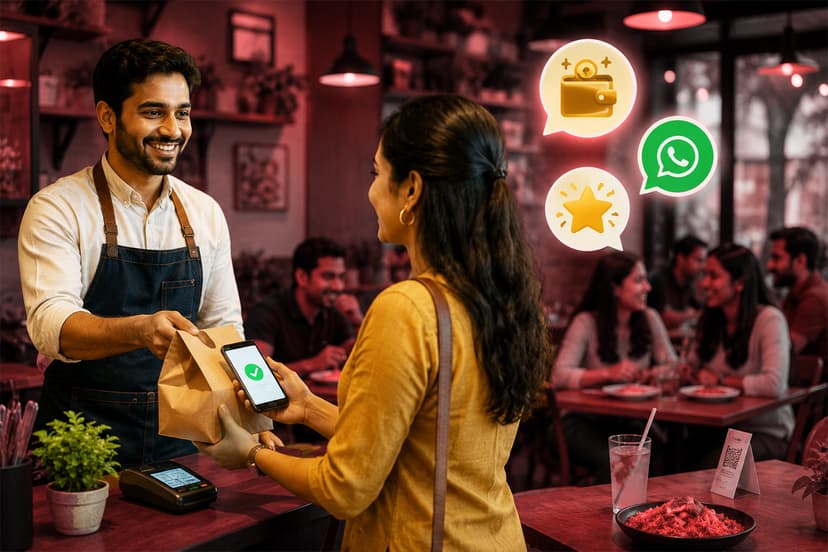
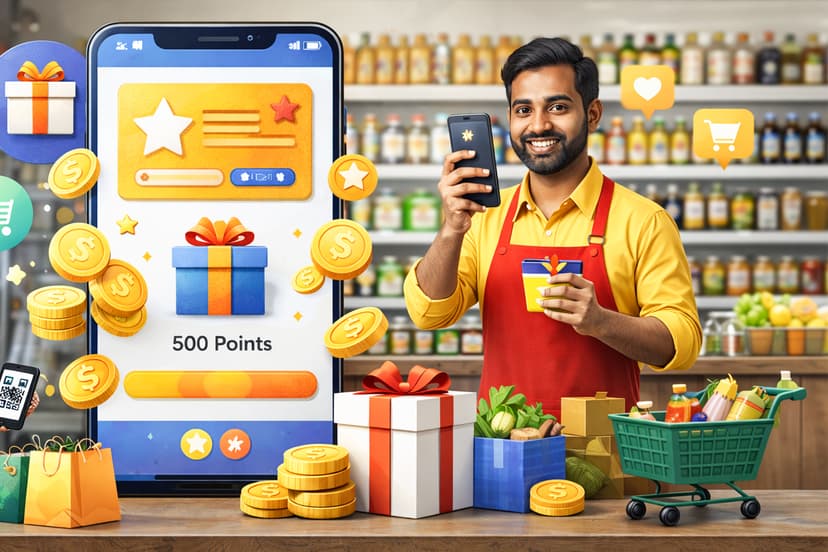
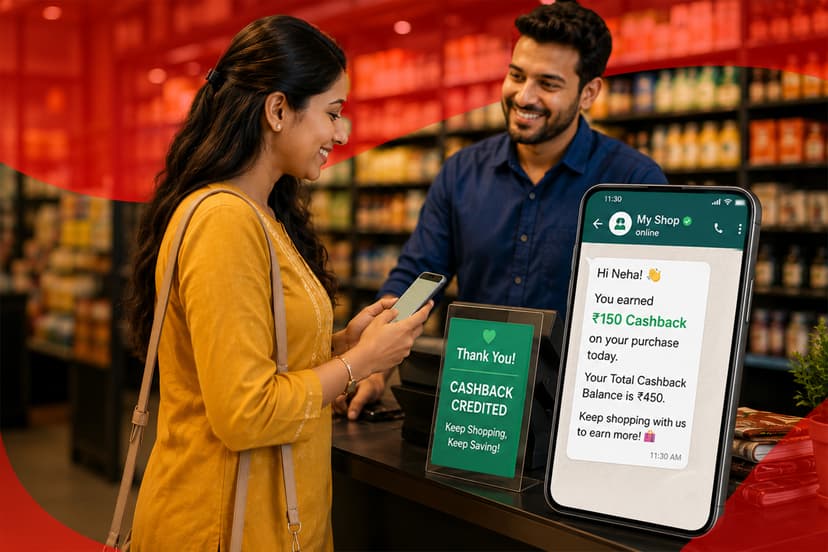
Here is how it works. Every time a customer makes a purchase at your shop, a small percentage of what they spent, typically 4-5%, goes into a digital wallet linked to their mobile number. That balance sits there, visible to them, and creates a quiet but persistent pull to come back and use it.
Think about the psychology at play. A customer who just spent Rs. 600 at your shop and has Rs. 30 of cashback waiting for them is not in a neutral position about their next purchase. They have a financial interest in returning to you specifically. Not your competitor down the street. Not an app. Your shop.
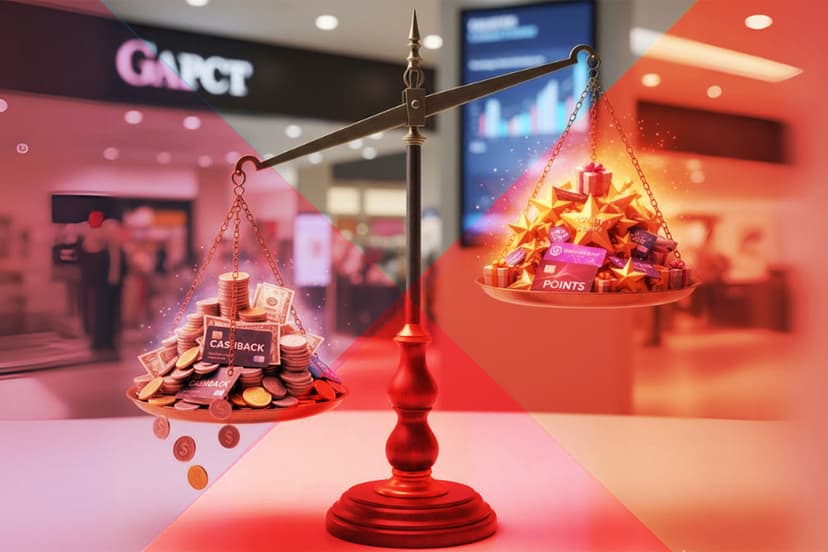
This is fundamentally different from offering a discount. A discount reduces the value of what they bought today. Cashback rewards them for coming back tomorrow. The outcome feels like a bonus rather than a price reduction, which means it does not erode the perceived value of your products.
And the data backs this up. Repeat customers with active loyalty balances visit 22% more frequently and spend 38% more per visit than customers without any loyalty relationship (Circana/Paytronix, 2026).
The key is making enrollment completely frictionless. No app to download, no form to fill, no card to carry. Just a mobile number at the counter. That is what Fydo is built to do, cashback credited automatically, communicated via WhatsApp, and available for redemption on the next visit.
2. Use WhatsApp to Stay in Your Customers' Minds
The biggest reason customers do not come back is not that they disliked you. It is that they forgot about you.
When someone buys from your shop and then does not hear from you again, life moves on. Other options fill the space. Before you know it, three months have passed and that customer is buying from somewhere else entirely, not because they chose to leave but because nothing reminded them to stay.
WhatsApp fixes this, and in the Indian context, it is by far the most effective channel available to any local retailer. WhatsApp messages in India achieve open rates of 85-98%, compared to around 21% for email (Waakif, 2026). In Tier 2 and Tier 3 cities, WhatsApp surveys and messages achieve 3-5x higher response rates than email (QuestionPro, 2026).
The messages that drive the most repeat visits are the simplest ones:
Cashback credited: "Hi [Name], you earned Rs. 45 cashback on your visit today. It is waiting for you at [Shop Name]."
Balance reminder: "Hi [Name], you have Rs. 45 cashback at [Shop Name]. Come visit us soon."
Win-back message: "Hi [Name], we have not seen you in a while. Your Rs. 45 cashback is still waiting, and we have some new arrivals you might like."
These are not complicated marketing campaigns. They are simple, personal, timely reminders that cost almost nothing to send and bring customers back at a measurably higher rate than doing nothing.
With Fydo, all three of these messages are automated. You set them up once, and the system sends them at the right moment for every customer in your base, without you having to remember or manually manage anything.
3. Make the First Visit Memorable Enough to Create a Second
This one sounds obvious, but it is worth stating directly because it is where most shops underinvest.
The window between a customer's first visit and their decision about whether to come back is short. Research consistently shows that repeat purchases often happen soon after the first, so the post-visit experience matters enormously. If a customer walks out feeling like they were just another transaction, they have no particular reason to choose you again.
A few things that shift this without requiring any budget:
Remember names when you can. In Indian retail, especially in smaller cities, personal recognition is enormously powerful. A customer who is greeted by name feels valued in a way that no discount can replicate.
Give a reason to return before they leave. "Your cashback will be credited in a few minutes. Next time you visit, you can use it." This single sentence plants the seed of a return visit at the exact moment the customer is most receptive.
Make the enrollment moment feel like a gift. When you ask for a customer's mobile number to set up their loyalty account, frame it as something you are doing for them, not collecting from them. "Let me set up your cashback account so you start earning on today's purchase" lands very differently from "can I take your number?"
4. Know Who Your Best Customers Are (And Treat Them Differently)
Not all customers are equal in terms of what they bring to your business. A customer who visits every week and spends Rs. 800 per visit is worth dramatically more over a year than a customer who visits once and never returns.
The problem is that most independent retailers in India have no systematic way of knowing which customers fall into which category. They rely on memory and intuition, which works when you have 50 customers but breaks down entirely when you have 500.
A basic loyalty program solves this automatically. Every purchase is tracked, and over time you build a clear picture of your top customers by visit frequency and total spend. Once you know who they are, you can treat them differently in small but meaningful ways:
A slightly higher cashback rate for customers who have crossed a spending threshold. A personal WhatsApp message during a festival. An early preview of a new product or collection. A birthday message with a special offer.
52% of consumers say they will go out of their way to buy from brands they feel loyal to (WifiTalents, 2026). The brands they feel loyal to are almost always the ones that made them feel seen. Your top customers are the ones most likely to become advocates, to bring their family, and to recommend you to their neighbourhood. They deserve to be identified and recognised.
5. Run Festival Campaigns That Reward Your Existing Customers First
Diwali, Eid, Navratri, Pongal, Christmas. Indian retail runs on festivals, and most shop owners approach them the same way: offer a discount to everyone, spend money on posters or social media ads, and hope for footfall.
There is a smarter approach. Use festivals as moments to reward your existing loyal customers before you spend anything on new customer acquisition.
A WhatsApp message to your loyalty base five days before Diwali saying "As a valued customer, you get double cashback on all purchases this week" costs you almost nothing to send. But it creates urgency, makes your existing customers feel appreciated, and drives them to come in before they go somewhere else.
The logic is this: your existing customers are already predisposed to buy from you. They just need a nudge. A well-timed festival campaign to your loyalty base converts at a far higher rate than a generic social media ad aimed at strangers who have never heard of your shop.
Once your loyal base is activated, they also become your best word-of-mouth channel. In tightly knit Indian communities, especially in Tier 2 cities, a customer who feels rewarded tells people they know. That organic reach is worth far more than any paid advertising.
6. Reduce Friction at Every Point of the Customer Journey
This is the underrated one. Customers do not always leave because a competitor offered something better. Sometimes they leave because something in their experience with you was just slightly harder than it needed to be.
Friction is the silent killer of repeat business. And in Indian retail in 2026, customers have been conditioned by UPI, Zomato, Blinkit, and Amazon to expect things to be fast, simple, and confirmation-based. Every point in your customer journey where something is slower or harder than they expect is a small reason to go somewhere that is not.
Some friction points that are worth auditing in any Indian retail shop:
Checkout speed. If billing takes more than a few minutes during a busy period, customers notice and remember it negatively.
Payment options. Offering UPI, card, and cash is table stakes in 2026. Missing even one of these creates friction for some segment of your customers.
Loyalty enrollment. If joining your loyalty program requires downloading an app, filling a form, or any step that takes more than 30 seconds, most customers will not bother. Mobile number only, done in under 30 seconds, is the standard.
Post-purchase communication. If a customer buys something and never hears from you again, there is nothing connecting them to their next visit. A single WhatsApp message confirming their cashback is a small thing that meaningfully reduces drop-off.
7. Turn One-Time Buyers Into Regulars Within the First 30 Days
The first 30 days after a customer's initial purchase are the highest-leverage window you have for converting them into a repeat visitor. This is when your shop is freshest in their memory, when their cashback balance is new and exciting, and when the habit of coming to you has not yet been replaced by going somewhere else.
A simple three-step sequence captures most of this opportunity:
Day 0 (day of first purchase): WhatsApp confirmation of cashback earned. "Welcome to [Shop Name]'s loyalty program. You have earned Rs. 30 cashback today."
Day 7: Gentle reminder. "Hi [Name], your Rs. 30 cashback is waiting for you at [Shop Name]. Hope to see you soon."
Day 25: Win-back if they have not returned. "Hi [Name], it has been a while. Your Rs. 30 cashback expires soon. Come visit us and use it."
This three-message sequence, automated and sent through WhatsApp, converts a meaningful percentage of first-time buyers into second-time visitors. And the second visit is where habit starts to form. Getting a customer from one visit to two is the hardest step. From two to ten is significantly easier.
Fydo automates this entire sequence. You do not have to remember which customers are on day 7 or day 25. The platform tracks it and sends the right message at the right time, for every customer in your base, without any manual work on your part.
Putting It All Together: A Simple 30-Day Action Plan
If you are starting from scratch, here is a practical sequence to get traction quickly:
Week 1: Set up a cashback loyalty program with mobile-number enrollment. Train counter staff on asking for mobile numbers. Target: enroll every new customer from day one.
Week 2: Set up your three WhatsApp automation messages (cashback credited, balance reminder, win-back). These run automatically from this point forward.
Week 3: Identify your top 20 customers by spend or visit frequency from the past three months. Send them a personal WhatsApp message thanking them for their loyalty, with a small bonus cashback or special offer.
Week 4: Send a festival or seasonal campaign to your full loyalty base. Measure how many of them visit that week versus your normal weekly average. That difference is your baseline retention lift.
By day 30, you will have a loyalty base forming, automated communication running, and your first real data on how your customers respond to being treated as valued regulars rather than anonymous transactions.
Frequently Asked Questions
Q: How much cashback should I offer to get customers to come back? 4-5% is the standard starting range for most Indian retail shops. It is meaningful enough to feel like a genuine reward without significantly impacting your margins. For higher-frequency purchases like groceries or medicines, even 3% is compelling because the balance accumulates quickly.
Q: Do I need a POS system or billing software to run a loyalty program? No. Fydo works completely independently of any POS or billing system. Counter staff simply enter the bill amount in the app, and the cashback is calculated, credited, and communicated to the customer automatically.
Q: How long before I see measurable results in repeat visits? Most shops see a noticeable uptick in repeat visits within 60-90 days of launching a loyalty program, once enough customers have enrolled and had their first redemption experience. The first month is about building the base.
Q: What if my customers are not comfortable with WhatsApp? This is rarely a concern in India in 2026. WhatsApp is used by over 535 million Indians across all age groups. Customers do not need to do anything on WhatsApp beyond reading a message, which essentially every smartphone user in India already knows how to do.
Q: I only have around 200 customers. Is it worth setting up a loyalty program? Absolutely. Smaller customer bases often see higher percentage returns from loyalty programs because each relationship matters more and communication feels more personal. If a loyalty program brings even 30% of those 200 customers in one extra time per month, the revenue impact is immediate and meaningful.
Q: Can I run loyalty programs for multiple shop locations under one account? Yes. Fydo supports multi-location management, so if you have more than one outlet, your customers can earn and redeem cashback across all your shops from a single wallet.
The Bottom Line
Getting new customers is necessary. But building a business on repeat customers is where the real leverage is.
Repeat customers spend more, cost less to market to, and bring their friends. A 5% improvement in retention can boost profits by up to 95%. And in a market where India's Tier 2 and Tier 3 cities are adding 100 million new retail consumers by 2030, the local retailer who builds genuine loyalty with their existing base is in a far stronger position than the one perpetually chasing new faces.
The practical path to more repeat customers in 2026 is not complicated. A simple cashback program, run through WhatsApp, with automated reminders at the right moments, is all most Indian retail shops need to meaningfully shift their repeat visit rate.
Fydo makes this possible for any shop, in any city, with no POS required and no customer app to download. Setup takes less than a day. The results compound quietly, month after month, as your loyal customer base grows and your dependency on expensive new customer acquisition shrinks.
Ready to turn your first-time buyers into regulars? [See how Fydo works for your shop – https://fydo.in]
Running a retail shop and want to know which retention approach works best for your category? Drop your message and we will get back to you.
Sources: WifiTalents Repeat Customer Data Report February 2026 | Bain and Company Customer Retention Research | Circana/Paytronix Loyalty Data 2026 | Waakif WhatsApp Marketing Statistics India 2026 | QuestionPro Customer Satisfaction Tier 2 Tier 3 Cities India 2026 | IBEF India Retail Sector Report 2026 | Future Market Insights India Loyalty Program Market 2026